KC-3323

CHOK1-CRE-Luc2-PTH1R-High-Cell-Line

×
26439
Home » Cell Lines » CHOK1-CRE-Luc2-PTH1R-High-Cell-Line

Background of CHOK1-CRE-Luc2-PTH1R-High-Cell-Line

Cyclic adenosine monophosphate (cAMP) is a second messenger involved in cell signaling that regulates various physiological and pathological processes. cAMP regulates the transcription of target genes by activating protein kinase A (PKA) and the transcription factor cAMP response element-binding protein (CREB). cAMP response element (CRE) is the target of many extracellular and intracellular signaling pathways, including cAMP, calcium, G-protein coupled receptors (GPCRs), and neurotrophins. The CAMP/PKA/CREB signaling pathway has both tumor-suppressive and tumor-promoting effects in cancer cells and can be useful in studying cancer signaling pathways. Parathyroid hormone 1 receptor (PTH1R) is a member of the parathyroid hormone receptor (PTHRs), which belongs to the G protein-coupled receptors (GPCRs) family of B group. The binding of the ligand to PTH1R triggers the conformational change of the receptor and induces phosphorylation, which activates different intracellular signaling cascades through the recruitment of heterotrimeric G protein (Gαβγ), mainly coupled with the Gαs/adenylate cyclase (AC)/cAMP/protein kinase A (PKA) pathway to deliver intracellular signals. PTH1R-mediated cAMP/PKA signal transduction pathway is related to bone anabolism and renal calcium and phosphorus metabolism, while PLC/PKC pathway mainly acts on the kidney and is negatively regulated by cAMP/PKA phosphorylation. The ability of PTH to induce sustained cAMP activation, whereas PTHrP induces only transient cAMP activation, provides a selective mode for PTH1R ligand peptide development. PTH1R can be activated by PTH (1-34).

Specifications

Catalog NumberKC-3323
Cell Line NameCHOK1-CRE-Luc2-PTH1R-High-Cell-Line
NCBI/UniProt Accession NumberNM_000316.3
Host Cell LineCHOK1-CRE-Luc2 cell line
DescriptionStable CHO-K1 cell line expressing exogenous luciferase under the control of cAMP response element (CRE) and exogenous human PTH1R gene
QuantityOne vial of frozen cells (≥2-106cells/vial)
StabilityStable in culture over a minimum of 10 passages
ApplicationDrug screening and biological assays
Freezing Medium70% RPMI1640 + 20% FBS + 10% DMSO
Propagation MediumRPMI1640 + 10% FBS + 750μg/mL Hygromycin B+10μg/mL Puromycin
Selection MarkerPuromycin, Hygromycin B
MorphologyEpithelial-like
SubcultureSplit the saturated culture at a ratio of 1:4-1:8 every 2~3 days; seed out at about 1-2 x 10⁵ cells/mL
Incubation37 °C with 5% CO2
StorageLiquid nitrogen immediately upon receiving
Doubling TimeApproximately 30 hours
Mycoplasma StatusNegative
In Vivo ValidationNA

Cell Line Generation

CHOK1-CRE-Luc2-PTH1R reporter cell line was generated using a lentiviral method.

Characterization

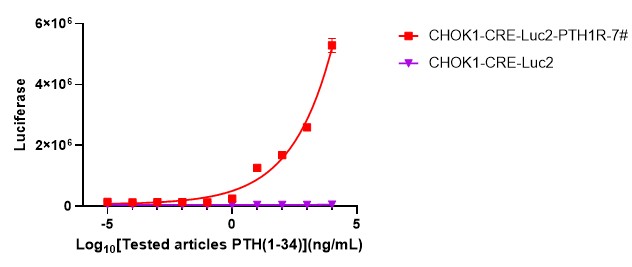
Figure 1: Characterization of luciferase expression in CHOK1-CRE-Luc2-PTH1R reporter clone activated by PTH (1-34) using luciferase assay.

Cell Resuscitation

  1. Prewarm the culture medium (RPMI1640 supplemented with 10% FBS, 750μg/mL Hygromycin B and 10μg/mL Puromycin) in a 37°C water bath.
  2. Thaw the frozen vial in a 37°C water bath for 1-2 minutes.
  3. Transfer the vial into a biosafety cabinet and wipe the surface with 70% ethanol.
  4. Unscrew the top of the vial and transfer the cell suspension gently into a sterile centrifuge tube containing 9.0 mL complete culture medium.
  5. Spin at ~ 125 x g for 5~7 minutes at room temperature and discard the supernatant without disturbing the pellet.
  6. Resuspend the cell pellet with the appropriate volume of complete medium and transfer the cell suspension into a T25 culture flask.
  7. Incubate the flask in an incubator at 37°C, 5% CO2.
  8. Split the saturated culture at a ratio of 1:4 ~ 1:8 every 2~3 days; seed out at about 1-2 x 10⁵ cells/mL.

    Cell Freezing

    1. Prepare the freezing medium (70% RPMI1640 + 20% FBS + 10% DMSO) fresh immediately before use.
    2. Keep the freezing medium on ice and label cryovials for later use.
    3. Trypsinize and harvest cells to a sterile, conical centrifuge tube during the logarithmic growth period and count the cells.
    4. Centrifuge the cells at 250×g for 5 minutes at room temperature and carefully aspirate off the medium.
    5. Resuspend the cells at a density of at least 3 x 10⁶ cells/mL in chilled freezing medium.
    6. Aliquot 1 mL of the cell suspension into each cryovial.
    7. Freeze cells in the CoolCell freezing container overnight in a −80°C freezer.
    8. Transfer vials to liquid nitrogen for long-term storage.

      References

      1. Martin TJ. PTH1R Actions on Bone Using the cAMP/Protein Kinase A Pathway. Front Endocrinol (Lausanne). 2022 Jan 19;12: 833221.
      2. Cheloha RW, Gellman SH, Vilardaga JP, Gardella TJ. PTH receptor-1 signaling-mechanistic insights and therapeutic prospects. Nat Rev Endocrinol. 2015 Dec;11(12):712-24.

        Use License Agreement

        Research Use Only.
        Not for use in diagnostic procedures or therapeutic applications.
        Redistribution of the cell line or its derivatives is prohibited without prior written permission from Kyinno Biotechnology.