KC-1901

MIAPaCa2-VHL-KO Cell Line

×
23017
Home » Cell Lines » MIAPaCa2-VHL-KO Cell Line

Background of MIAPaCa2-VHL-KO Cell Line

VHL encodes von Hippel-Lindau tumor suppressor and is also known as RCA1. The encoded protein is involved in the ubiquitination and degradation of hypoxia-inducible-factor (HIF), which is a transcription factor that plays a central role in the regulation of gene expression by oxygen. In addition to oxygen-related gene expression, this protein plays a role in many other cellular processes including cilia formation, cytokine signaling, regulation of senescence, and formation of the extracellular matrix. Variants of this gene are associated with von Hippel-Lindau syndrome, pheochromocytoma, erythrocytosis, renal cell carcinoma, and cerebellar hemangioblastoma.

Specifications

Catalog NumberKC-1901
Cell Line NameMIAPaCa2-VHL-KO Cell Line
Clone Number1C2
Host Cell LineMIAPaCa2
DescriptionMIAPaCa2-VHL-KO is a stable cell line carrying targeted knockout modifications
QuantityOne vial of frozen cells (≥2×10⁶ cells/vial)
StabilityStable in culture over a minimum of 10 passages
ApplicationDrug screening and biological assays
Freezing Medium70% DMEM+20% FBS+10% DMSO
Propagation MediumDMEM+10%FBS+2.5%HS
Selection MarkerN/A
MorphologyEpithelial
SubcultureSplit at a ratio of 1:4–1:6 every 2–3 days
Incubation37 °C with 5% CO₂
StorageLiquid nitrogen immediately upon receiving
Doubling TimeEstimated 19–36 hours
Mycoplasma StatusNegative
In Vivo ValidationNA

Cell Line Generation

MIAPaCa2-VHL-KO cell line was generated using CRISPR/Cas9-mediated disruption of VHL.

Characterization

Figure 1: Characterization of MIAPaCa2-VHL-KO cell line stable clone using PCR sequencing.

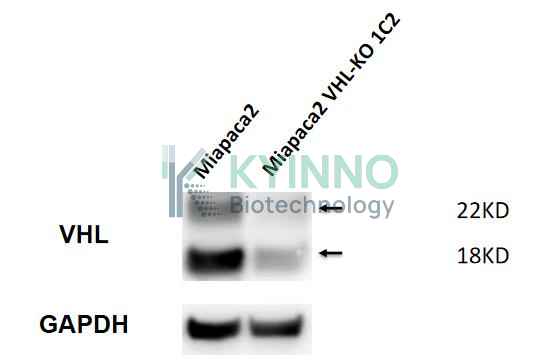
Figure 2: Characterization of MIAPaCa2-VHL-KO cell line stable clone using western blot.

Cell Resuscitation

  1. Pre-warm complete culture medium (basal medium and 10% FBS) in a 37°C water bath.
  2. Rapidly thaw the cryovial in a 37°C water bath for 1-2 minutes with gentle agitation.
  3. Transfer the vial to a biosafety cabinet, and disinfect the exterior with 70% ethanol.
  4. Aseptically transfer the cell suspension dropwise into a sterile centrifuge tube containing 9.0 mL of pre-warmed complete medium.
  5. Centrifuge at approximately 125 × g for 5–7 minutes at room temperature, carefully aspirate the supernatant without disturbing the cell pellet.
  6. Gently resuspend the pellet in an appropriate volume of complete medium and transfer the suspension into a T25 flask.
  7. Incubate the flask in a 37°C in a humidified 5% CO₂ incubator.
  8. Assess cell viability and morphology after 24 hours. If cells appear healthy, replace the medium with fresh medium supplemented with the appropriate selective antibiotic.
  9. Subculture the cells at a ratio of 1:4–1:6 every 2–3 days upon reaching 80%–90% confluency.

Cell Freezing

  1. Prepare the freezing medium (70% basal medium, 20% FBS and 10% DMSO) freshly before use.
  2. Pre-chill the freezing medium on ice and label the cryovials accordingly.
  3. Transfer the cell suspension to a sterile conical tube and perform a cell count to determine total viability and density.
  4. Centrifuge the cells at 250×g for 5 minutes at room temperature; carefully aspirate the supernatant.
  5. Gently resuspend the pellet in chilled freezing medium, ensuring a minimum cell density of 3×10⁶ cells/mL.
  6. Aliquot 1 mL of the cell suspension into each pre-labeled cryovial.
  7. Place the cryovials into a CoolCell® container and store at -80°C overnight for controlled-rate cooling.
  8. Transfer the cryovials to the liquid nitrogen for long-term storage the following day.

References

  1. Deng R, Wang B, Zou M et al. Beyond hypoxia and ccRCC: the expanding universe of VHL novel targets and next-generation therapeutics. Biomarker research. 2026 Sep 9;14(1):. PMID: 42717364. doi: 10.1186/s40364-026-00986-0.
  2. Kanno H, Nakahara K Regenerative potential of von Hippel-Lindau tumor suppressor protein. World journal of biological chemistry. 2026 Sep 5;17(3):119936. PMID: 42707860. doi: 10.4331/wjbc.119936.
  3. Abad L, Tosatto SCE, Leonardi E The VHL tumor suppressor at the crossroad of protein folding, aggregation, and cancer. Molecular oncology. 2026 Sep 7;:. PMID: 42704349. doi: 10.1002/1878-0261.70325.

Use License Agreement

Research Use Only.
Not for use in diagnostic procedures or therapeutic applications.
Redistribution of the cell line or its derivatives is prohibited without prior written permission from Kyinno Biotechnology.