
KC-5828

LS174T-ST6GALNAC1-KO Cell Line

×
59987
Home » LS174T-ST6GALNAC1-KO Cell Line

Background of LS174T-ST6GALNAC1-KO Cell Line

ST6GALNAC1 encodes ST6 N-acetylgalactosaminide alpha-2,6-sialyltransferase 1 and is also known as STYI. Glycosylation of proteins affects cell-cell interaction, interactions with the matrix, and the functions of intracellular molecules. ST6GALNAC1 transfers a sialic acid, N-acetylneuraminic acid (NeuAc), in an alpha-2,6 linkage to O-linked GalNAc residues. The cancer-associated sialyl-Tn (sTn) antigen is formed by ST6GALNAC1-catalyzed sialylation of GalNAc residues on mucins (Ikehara et al., 1999 [PubMed 10536037]; Sewell et al., 2006 [PubMed 16319059]).[supplied by OMIM, Mar 2008]

Specifications

Catalog NumberKC-5828
Cell Line NameLS174T-ST6GALNAC1-KO Cell Line
Clone Number2B4
Host Cell LineLS174T
DescriptionLS174T-ST6GALNAC1-KO is a stable cell line carrying targeted knockout modifications
QuantityOne vial of frozen cells (≥2×10⁶ cells/vial)
StabilityStable in culture over a minimum of 10 passages
ApplicationDrug screening and biological assays
Freezing Medium70% MEM+20% FBS+10% DMSO
Propagation MediumMEM+10%FBS+0.1mM NEAA
Selection MarkerNA
MorphologyEpithelial
SubcultureSplit at a ratio of 1:4–1:6 every 2–3 days
Incubation37 °C with 5% CO₂
StorageLiquid nitrogen immediately upon receiving
Doubling TimeEstimated 19–36 hours
Mycoplasma StatusNegative
In Vivo ValidationNA

Cell Line Generation

LS174T-ST6GALNAC1-KO cell line was generated using CRISPR/Cas9-mediated disruption of ST6GALNAC1.

Characterization

Figure 1: Characterization of LS174T-ST6GALNAC1-KO cell line stable clone using PCR sequencing.

Figure 2: Characterization of LS174T-ST6GALNAC1-KO cell line stable clone using RT-PCR sequencing.
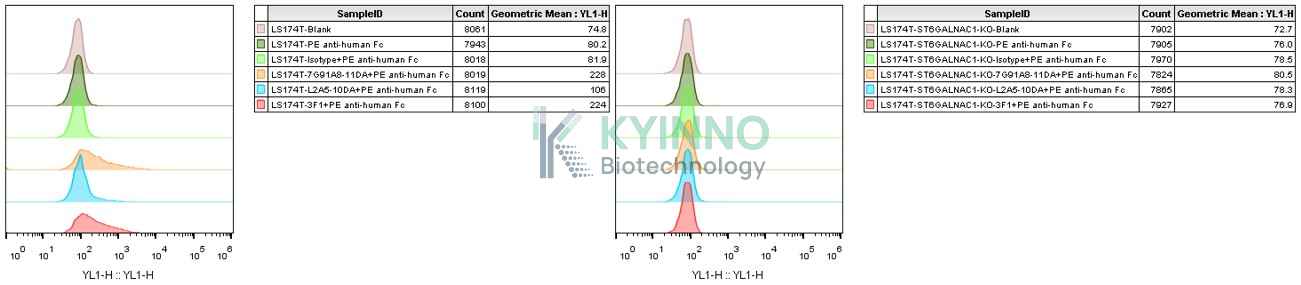
Figure 3: Characterization of LS174T-ST6GALNAC1-KO cell line stable clone using FACS.

Cell Resuscitation

  1. Pre-warm complete culture medium (basal medium and 10% FBS) in a 37°C water bath.
  2. Rapidly thaw the cryovial in a 37°C water bath for 1-2 minutes with gentle agitation.
  3. Transfer the vial to a biosafety cabinet, and disinfect the exterior with 70% ethanol.
  4. Aseptically transfer the cell suspension dropwise into a sterile centrifuge tube containing 9.0 mL of pre-warmed complete medium.
  5. Centrifuge at approximately 125 × g for 5–7 minutes at room temperature, carefully aspirate the supernatant without disturbing the cell pellet.
  6. Gently resuspend the pellet in an appropriate volume of complete medium and transfer the suspension into a T25 flask.
  7. Incubate the flask in a 37°C in a humidified 5% CO₂ incubator.
  8. Assess cell viability and morphology after 24 hours. If cells appear healthy, replace the medium with fresh medium supplemented with the appropriate selective antibiotic.
  9. Subculture the cells at a ratio of 1:4–1:6 every 2–3 days upon reaching 80%–90% confluency.

Cell Freezing

  1. Prepare the freezing medium (70% basal medium, 20% FBS and 10% DMSO) freshly before use.
  2. Pre-chill the freezing medium on ice and label the cryovials accordingly.
  3. Transfer the cell suspension to a sterile conical tube and perform a cell count to determine total viability and density.
  4. Centrifuge the cells at 250×g for 5 minutes at room temperature; carefully aspirate the supernatant.
  5. Gently resuspend the pellet in chilled freezing medium, ensuring a minimum cell density of 3×10⁶ cells/mL.
  6. Aliquot 1 mL of the cell suspension into each pre-labeled cryovial.
  7. Place the cryovials into a CoolCell® container and store at -80°C overnight for controlled-rate cooling.
  8. Transfer the cryovials to the liquid nitrogen for long-term storage the following day.

References

  1. Umino R, Ishimoto-Namiki U, Naito C et al. Novel insights into immunohistochemical analysis of intrahepatic cholangiocarcinoma: ST6 N-acetylgalactosaminide alpha-2,6-sialyltransferase 1 (ST6GalNAc1) as a new marker for large duct type. Virchows Archiv : an international journal of pathology. 2026 Aug 14;:. PMID: 42595919. doi: 10.1007/s00428-026-04675-z.
  2. Sodini A, Casali E, Travecedo MA et al. Studies on a Sulfoxide-Bridged Tn Antigen Mimetic: Interaction with Macrophage Galactose Lectin and Inhibition of Sialyltransferase ST6GALNAC1. ACS omega. 2026 Apr 21;11(15):23350-23358. PMID: 42040468. doi: 10.1021/acsomega.6c00385.
  3. Fu T, Wang Y, Wang L et al. ST6GALNAC1 mediates sialylation of mucins in non-small cell lung cancer to evade immune surveillance. Journal of thoracic disease. 2025 Aug 31;17(8):6076-6089. PMID: 40950850. doi: 10.21037/jtd-2025-660.

Use License Agreement

Research Use Only.
Not for use in diagnostic procedures or therapeutic applications.
Redistribution of the cell line or its derivatives is prohibited without prior written permission from Kyinno Biotechnology.