KC-5503

CT26-KRAS-V8M-G12C-KI-Abcb1a-KO Cell Line

×
57866
Home » CT26-KRAS-V8M-G12C-KI-Abcb1a-KO Cell Line

Background of CT26-KRAS-V8M-G12C-KI-Abcb1a-KO Cell Line

KRAS encodes KRas proto-oncogene, GTPase and is also known as NS. A single amino acid substitution is responsible for an activating mutation. The transforming protein that results is implicated in various malignancies, including lung adenocarcinoma, mucinous adenoma, ductal carcinoma of the pancreas and colorectal carcinoma. Alternative splicing leads to variants encoding two isoforms that differ in the C-terminal region.

ABCB1 encodes ATP binding cassette subfamily B member 1 and is also known as CLCS. ABC proteins transport various molecules across extra- and intra-cellular membranes. ABC genes are divided into seven distinct subfamilies (ABC1, MDR/TAP, MRP, ALD, OABP, GCN20, White). This protein is a member of the MDR/TAP subfamily. Members of the MDR/TAP subfamily are involved in multidrug resistance.

Specifications

Catalog NumberKC-5503
Cell Line NameCT26-KRAS-V8M-G12C-KI-Abcb1a-KO Cell Line
Clone Number1C4
Host Cell LineCT26-KRAS-V8M-G12C-KI
DescriptionCT26-KRAS-V8M-G12C-KI-Abcb1a-KO is a stable cell line carrying knockout and knock-in modifications
QuantityOne vial of frozen cells (≥2×10⁶ cells/vial)
StabilityStable in culture over a minimum of 10 passages
ApplicationDrug screening and biological assays
Freezing Medium70% RPMI1640+20% FBS+10% DMSO
Propagation MediumRPMI1640+10%FBS
Selection MarkerNA
MorphologyEpithelial
SubcultureSplit at a ratio of 1:4–1:6 every 2–3 days
Incubation37 °C with 5% CO₂
StorageLiquid nitrogen immediately upon receiving
Doubling TimeEstimated 19–36 hours
Mycoplasma StatusNegative
In Vivo ValidationNA

Cell Line Generation

CT26-KRAS-V8M-G12C-KI-Abcb1a-KO cell line was generated using CRISPR/Cas9-mediated knockout and knock-in editing of KRAS, ABCB1A.

Characterization

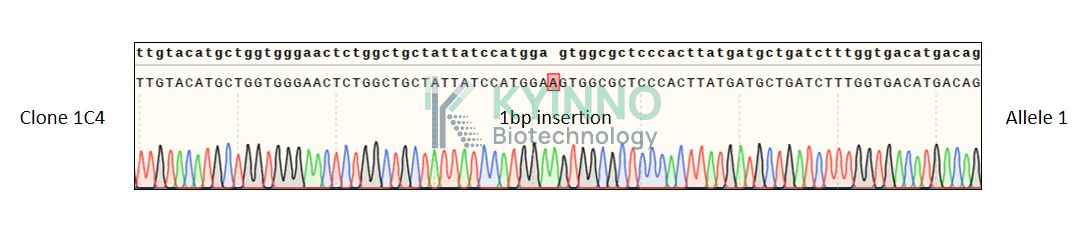
Figure 1: Characterization of CT26-KRAS-G12C-KI-Abcb1a-KO cell line stable clone using PCR sequencing.

Figure 2: Characterization of CT26-KRAS-G12C-KI-Abcb1a-KO cell line stable clone using RT-PCR sequencing.
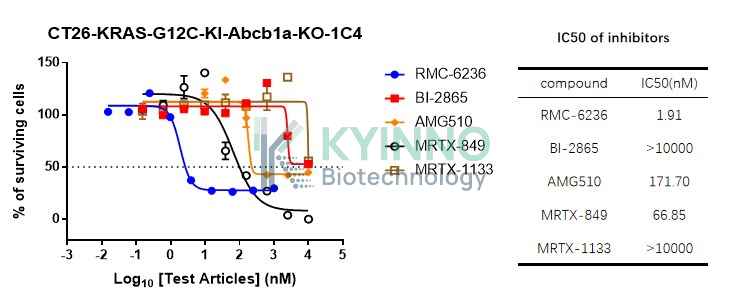
Figure 3: Characterization of dose-response curves for KRAS inhibitors on CT26-KRAS-G12C-KI-Abcb1a-KO cells.
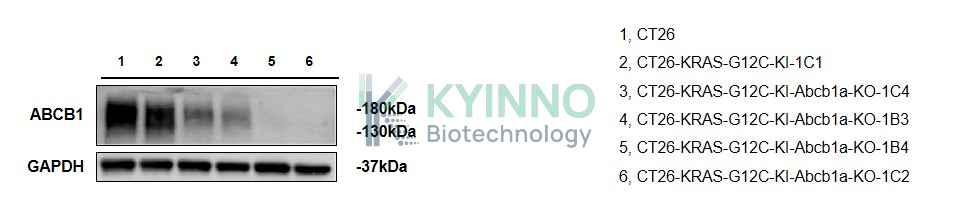
Figure 4:Characterization of CT26-KRAS-G12C-KI-Abcb1a-KO cell line stable clone using western blot.

Cell Resuscitation

  1. Pre-warm complete culture medium (basal medium and 10% FBS) in a 37°C water bath.
  2. Rapidly thaw the cryovial in a 37°C water bath for 1-2 minutes with gentle agitation.
  3. Transfer the vial to a biosafety cabinet, and disinfect the exterior with 70% ethanol.
  4. Aseptically transfer the cell suspension dropwise into a sterile centrifuge tube containing 9.0 mL of pre-warmed complete medium.
  5. Centrifuge at approximately 125 × g for 5–7 minutes at room temperature, carefully aspirate the supernatant without disturbing the cell pellet.
  6. Gently resuspend the pellet in an appropriate volume of complete medium and transfer the suspension into a T25 flask.
  7. Incubate the flask in a 37°C in a humidified 5% CO₂ incubator.
  8. Assess cell viability and morphology after 24 hours. If cells appear healthy, replace the medium with fresh medium supplemented with the appropriate selective antibiotic.
  9. Subculture the cells at a ratio of 1:4–1:6 every 2–3 days upon reaching 80%–90% confluency.

Cell Freezing

  1. Prepare the freezing medium (70% basal medium, 20% FBS and 10% DMSO) freshly before use.
  2. Pre-chill the freezing medium on ice and label the cryovials accordingly.
  3. Transfer the cell suspension to a sterile conical tube and perform a cell count to determine total viability and density.
  4. Centrifuge the cells at 250×g for 5 minutes at room temperature; carefully aspirate the supernatant.
  5. Gently resuspend the pellet in chilled freezing medium, ensuring a minimum cell density of 3×10⁶ cells/mL.
  6. Aliquot 1 mL of the cell suspension into each pre-labeled cryovial.
  7. Place the cryovials into a CoolCell® container and store at -80°C overnight for controlled-rate cooling.
  8. Transfer the cryovials to the liquid nitrogen for long-term storage the following day.

References

  1. Wang H, Chen H, Li S et al. Molecular Mechanisms and Therapeutic Advances in KRAS G12C-Mutant Non-Small Cell Lung Cancer: Toward Mechanism-Guided Longitudinal Management. Cancer innovation. 2026 Oct;5(5):e70082. PMID: 42890422. doi: 10.1002/cai2.70082.
  2. Hao S, Niu T, Wu X et al. Advances in KRAS(G12D)-targeted therapy: from small-molecule inhibitors to PROTACs and molecular glues. Bioorganic chemistry. 2026 Oct 8;183:110633. PMID: 42854602. doi: 10.1016/j.bioorg.2026.110633.

Use License Agreement

Research Use Only.
Not for use in diagnostic procedures or therapeutic applications.
Redistribution of the cell line or its derivatives is prohibited without prior written permission from Kyinno Biotechnology.