KC-3871

293T-CLDN2 Cell Line

×
34938
Home » 293T-CLDN2 Cell Line

Background of 293T-CLDN2 Cell Line

CLDN2 (Claudin 2) is a Protein Coding gene. This gene encodes a member of the claudin family, a group of integral membrane proteins that constitute the backbone of tight junction strands. Members of this family share a common structure with four transmembrane domains, two extracellular loops, and cytoplasmic N- and C-termini. Claudins function primarily in regulating paracellular permeability, which governs the selective passage of ions and small molecules across epithelial and endothelial sheets. The encoded protein, claudin-2, is predominantly expressed in leaky epithelia including the proximal tubules of the kidney, the small intestine, and the liver. It functions as a cation-selective paracellular channel that mediates pore pathway permeability, specifically facilitating the paracellular transport of sodium, potassium, and water. CLDN2 expression is dynamically regulated during development and disease, and its upregulation has been implicated in the pathogenesis of colorectal cancer, where it promotes cell proliferation and migration. Mutations in this gene or alterations in its expression have also been linked to chronic inflammatory conditions such as inflammatory bowel disease.

Specifications

Catalog NumberKC-3871
Cell Line Name293T-CLDN2 Cell Line
NCBI/UniProt Accession NumberNM_020384.4
Clone Number1#
Host Cell Line293T
DescriptionStable 293T cell line expressing exogenous CLDN2 gene
QuantityOne vial of frozen cells (≥2×10⁶ cells)
StabilityStable in culture over a minimum of 10 passages
ApplicationDrug screening and biological assays
Freezing Medium70% DMEM+20% FBS+10% DMSO
Propagation MediumDMEM+10% FBS+1μg/mL puromycin
Selection MarkerPuromycin
Morphologyepithelial
SubcultureSplit saturated culture 1:4 to 1:8 every 2-3 days
Incubation37 °C with 5% CO2
StorageLiquid nitrogen immediately upon receiving
Doubling TimeApproximately 30 hours
Mycoplasma StatusNegative
In Vivo ValidationNA

Cell Line Generation

293T cell line was generated using a lentiviral vector expressing the CLDN2 sequence.

Characterization

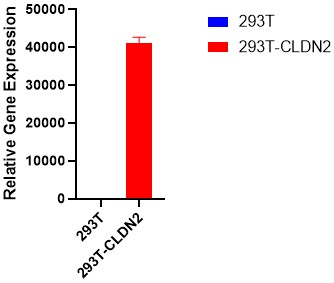
Figure 1:Characterization of CLDN2 in the 293T-CLDN2 stable clone using qPCR sequencing.

Cell Resuscitation

  1. Pre-warm complete culture medium ( DMEM+10% FBS+1μg/ml puromycin) in a 37°C water bath.
  2. Rapidly thaw the cryovial in a 37°C water bath for 1-2 minutes with gentle agitation.
  3. Transfer the vial to a biosafety cabinet, and disinfect the exterior with 70% ethanol.
  4. Aseptically transfer the cell suspension dropwise into a sterile centrifuge tube containing 9.0 mL of pre-warmed complete medium.
  5. Centrifuge at approximately 125 × g for 5–7 minutes at room temperature, carefully aspirate the supernatant without disturbing the cell pellet.
  6. Gently resuspend the pellet in an appropriate volume of complete medium and transfer the suspension into a T25 flask.
  7. Incubate the flask in a 37°C in a humidified 5% CO2 incubator.
  8. Assess cell viability and morphology after 24 hours. If cells appear healthy, replace the medium with fresh medium supplemented with the appropriate selective antibiotic.
  9. Subculture the cells at a ratio of 1:4 to 1:8 every 2-3 days upon reaching 80%–90% confluency.

Cell Freezing

  1. Prepare the freezing medium (70% DMEM+20% FBS+10% DMSO) freshly before use.
  2. Pre-chill the freezing medium on ice and label the cryovials accordingly.
  3. Transfer the cell suspension to a sterile conical tube and perform a cell count to determine total viability and density.
  4. Centrifuge the cells at 250×g for 5 minutes at room temperature; carefully aspirate the supernatant.
  5. Gently resuspend the cell pellet in chilled freezing medium, ensuring a minimum cell density of 3×10⁶ cells/mL.
  6. Aliquot 1 mL of the cell suspension into each pre-labeled cryovial.
  7. Place the cryovials into a CoolCell® container and store at -80°C overnight for controlled-rate cooling.
  8. Transfer the cryovials to the liquid nitrogen for long-term storage the following day.

References

  1. Enck AH, Berger UV, Yu AS. Claudin-2 is selectively expressed in proximal nephron in mouse kidney. Am J Physiol Renal Physiol. 2001;281(5):F966-F974. doi:10.1152/ajprenal.0021.2001. PMID: 11592954.
  2. Tabariès S, Siegel PM. The role of claudins in cancer metastasis. Oncogene. 2017;36(9):1176-1190. doi:10.1038/onc.2016.289. PMID: 27524421.

Use License Agreement

Research Use Only.
Not for use in diagnostic procedures or therapeutic applications.
Redistribution of the cell line or its derivatives is prohibited without prior written permission from Kyinno Biotechnology.