KC-1527

HEK293-ERBB2-ERBB3 Cell Line

×
22315
Home » HEK293-ERBB2-ERBB3 Cell Line

Background of HEK293-ERBB2-ERBB3 Cell Line

ERBB2 is a transmembrane tyrosine kinase receptor (TKR) member of the epidermal growth factor receptor (EGFR) family. In the context of ERBB2 amplification and resulting overexpression of ERBB2, heterodimerization of ERBB2 with other EGFR members or homodimerization is promoted and ERBB2 autophosphorylation of tyrosine residues in the cytoplasmic domain occurs, leading to a cascade of events promoting tumor formation. It has been argued that homodimeric ERBB2 receptors are less tumorigenic than the corresponding heterodimeric pairs and that heterodimers containing ERBB2 have more transforming capacity. Furthermore, HER2/EGFR and HER2/ERBB3 heterodimers impact signaling differentially. HER2 gene abnormalities have been found in breast cancer, nested cancer, gastrointestinal cancer and lung cancer, and HER2 mutations account for about 2% to 4% of NSCLC cases.The EGFR family of inhibitors Afatinib (Gilotrif) and the antibody conjugate drug (ADC) Enhertu are used to treat ERBB2 positivity.ERBB3 (also known as HER3, human epidermal growth factor receptor 3) is a member of epidermal growth factor receptor family (EGFR). Because ERBB3 lacks intrinsic kinase activity of its own, it is unable to transmit signals to the cell through protein phosphorylation. ERBB3 binds to the ligand Neurogulin (NRG-1/-2), also known as heregulin (HRG-1/-2). Ligand binding induces a conformational change in ERBB3, thereby achieving dimerization, phosphorylation, and activation of signaling pathways. ERBB3 is expressed in the gastrointestinal tract, reproductive system, skin, nervous system, urinary tract, and endocrine system in normal adults. Indeed, ERBB3 itself is regulated to varying degrees, with its ubiquitination and proteasomal degradation regulated by 2 ubiquitin ligases, NEDD4 and NRDP1. ERBB3 overexpression was observed in breast cancer, lung cancer, colorectal cancer, gastric cancer, head and neck squamous cell carcinoma, ovarian cancer, melanoma, prostate cancer and bladder cancer. The ERBB3 target drugs Patritumab Deruxtecan and Izalontamab are in phase III clinical trials.

Specifications

Catalog NumberKC-1527
Cell Line NameHEK293-ERBB2-ERBB3 Cell Line
NCBI/UniProt Accession NumberNM_004448.4, NM_001982.4
Clone Number2#
Host Cell LineHEK293
DescriptionStable HEK293 cell line expressing exogenous ERBB2-ERBB3 gene.
QuantityOne vial of frozen cells (≥2×10⁶ cells)
StabilityStable in culture over a minimum of 10 passages
ApplicationDrug screening and biological assays
Freezing Medium70% DMEM+20% FBS+10% DMSO
Propagation MediumDMEM+10% FBS +1μg/mL Puromycin
Selection MarkerPuromycin
MorphologyEpithelial
SubcultureSplit saturated culture 1:4-1:8 every 2-3 days; seed out at about 1-3 × 10⁵ cells/mL
Incubation37 °C with 5% CO2
StorageLiquid nitrogen immediately upon receiving
Doubling TimeApproximately 30 hours
Mycoplasma StatusNegative
In Vivo ValidationNA

Cell Line Generation

HEK293-ERBB2-ERBB3 cell line was generated using lentivirus expressing ERBB2-ERBB3 sequence.

Characterization

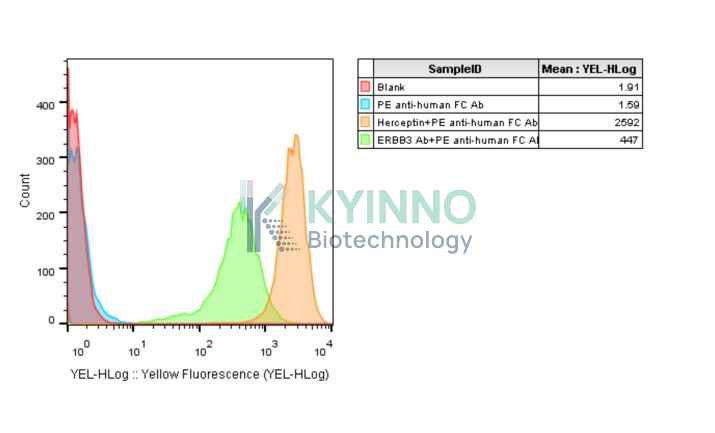
Figure 1. Characterization of ERBB2 and ERBB3 over-expression in the HEK293-ERBB2-ERBB3 stable clone using FACS.

Cell Resuscitation

  1. Prewarm culture medium (DMEM supplemented with 10% FBS and 1μg/mL Puromycin)in a 37°C water bath.
  2. Thaw the frozen vial in a 37°C water bath for 1-2 minutes.
  3. Transfer the vial into biosafety cabinet, and wipe the surface with 70% ethanol.
  4. Unscrew the top of the vial and transfer the cell suspension gently into a sterile centrifuge tube containing 9.0mL complete culture medium.
  5. Spin at ~ 125 × g for 5-7 minutes at room temperature, and discard the supernatant without disturbing the pellet.
  6. Resuspend cell pellet with the appropriate volume of complete medium and transfer the cell suspension into a T25 culture flask.
  7. Incubate the flask at 37°C, 5% CO2 incubator.
  8. Split saturated culture 1:4-1:8 every 2-3 days; seed out at about 1-3 × 10⁵ cells/mL.

Cell Freezing

  1. Prepare the freezing medium (70% DMEM + 20% FBS + 10% DMSO) fresh immediately before use.
  2. Keep the freezing medium on ice and label cryovials.
  3. Transfer cells to a sterile, conical centrifuge tube, and count the cells.
  4. Centrifuge the cells at 250×g for 5 minutes at room temperature and carefully aspirate off the medium.
  5. Resuspend the cells at a density of at least 3×10⁶ cells/mL in chilled freezing medium.
  6. Aliquot 1 mL of the cell suspension into each cryovial.
  7. Freeze cells in the CoolCell freezing container overnight in a -80°C freezer.
  8. Transfer vials to liquid nitrogen for long-term storage.

References

  1. Augustin JE, Soussan P, Bass AJ. Targeting the complexity of ERBB2 biology in gastroesophageal carcinoma. Ann Oncol. 2022 Nov;33(11):1134-1148. Doi: 10.1016/j.annonc.2022.08.001. Epub 2022 Aug 10. Erratum in: Ann Oncol. 2023 Feb 6;: PMID: 35963482.
  2. Hafeez U, Parslow AC, Gan HK, Scott AM. New insights into ErbB3 function and therapeutic targeting in cancer. Expert Rev Anticancer Ther. 2020 Dec;20(12):1057-1074. doi: 10.1080/14737140.2020.1829485. Epub 2020 Oct 26. PMID: 32981377.
  3. Li M, Liu F, Zhang F, Zhou W, Jiang X, Yang Y, Qu K, Wang Y, Ma Q, Wang T, Bai L, Wang Z, Song X, Zhu Y, Yuan R, Gao Y, Liu Y, Jin Y, Li H, Xiang S, Ye Y, Zhang Y, Jiang L, Hu Y, Hao Y, Lu W, Chen S, Gu J, Zhou J, Gong W, Zhang Y, Wang X, Liu X, Liu C, Liu H, Liu Y, Liu Y. Genomic ERBB2/ERBB3 mutations promote PD-L1-mediated immune escape in gallbladder cancer: a whole-exome sequencing analysis. Gut. 2019 Jun;68(6):1024-1033. doi: 10.1136/gutjnl-2018-316039. Epub 2018 Jun 28. PMID: 29954840.

Use License Agreement

Research Use Only.
Not for use in diagnostic procedures or therapeutic applications.
Redistribution of the cell line or its derivatives is prohibited without prior written permission from Kyinno Biotechnology.