KC-0208

293T-cyno-LAG3 Cell Line

×
20015
Home » 293T-cyno-LAG3 Cell Line

Background of 293T-cyno-LAG3 Cell Line

LAG3 encodes lymphocyte activating 3 and is also known as CD223. Lymphocyte-activation protein 3 belongs to Ig superfamily and contains 4 extracellular Ig-like domains. The LAG3 gene contains 8 exons. The sequence data, exon/intron organization, and chromosomal localization all indicate a close relationship of LAG3 to CD4.

Specifications

Catalog NumberKC-0208
Cell Line Name293T-cyno-LAG3 Cell Line
NCBI/UniProt Accession NumberXM_005569954.2
Host Cell Line293T
Description293T-cyno-LAG3 is a stable engineered cell line expressing cyno LAG3
QuantityOne vial of frozen cells (≥2×10⁶ cells/vial)
StabilityStable in culture over a minimum of 10 passages
ApplicationDrug screening and biological assays
Freezing Medium70% DMEM+20% FBS+10% DMSO
Propagation MediumDMEM+10%FBS+0.5μg/mL Puromycin
Selection MarkerPuromycin
MorphologyEpithelial
SubcultureSplit at a ratio of 1:4–1:6 every 2–3 days
Incubation37 °C with 5% CO₂
StorageLiquid nitrogen immediately upon receiving
Doubling TimeEstimated 19–36 hours
Mycoplasma StatusNegative
In Vivo ValidationNA

Cell Line Generation

293T-cyno-LAG3 cell line was generated using a lentiviral vector expressing the cyno LAG3 sequence.

Characterization

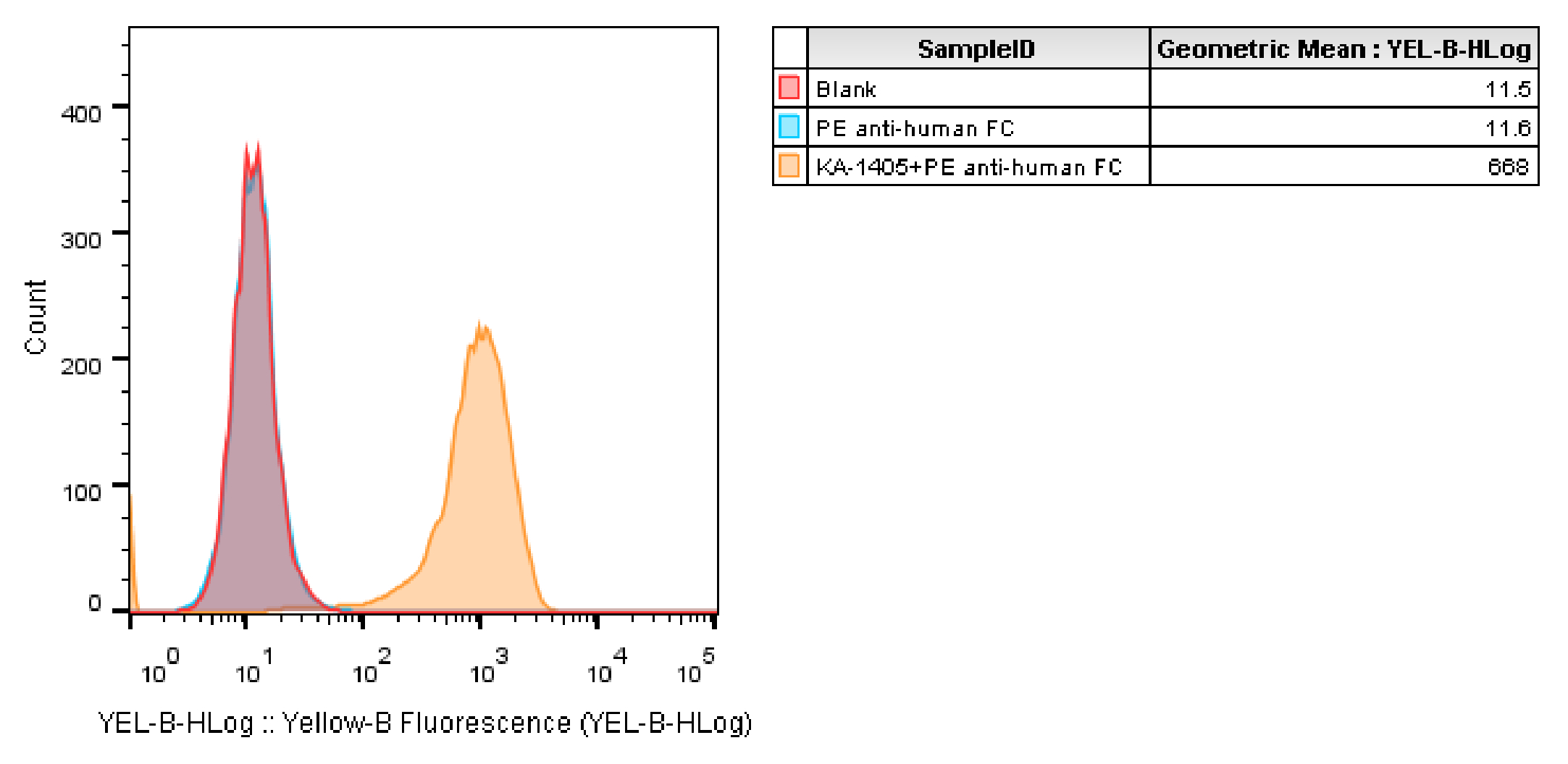
Figure 1: Characterization of cyno LAG3 overexpression in the 293T-cyno-LAG3 stable clone using FACS.

Cell Resuscitation

  1. Pre-warm complete culture medium (basal medium and 10% FBS) in a 37°C water bath.
  2. Rapidly thaw the cryovial in a 37°C water bath for 1-2 minutes with gentle agitation.
  3. Transfer the vial to a biosafety cabinet, and disinfect the exterior with 70% ethanol.
  4. Aseptically transfer the cell suspension dropwise into a sterile centrifuge tube containing 9.0 mL of pre-warmed complete medium.
  5. Centrifuge at approximately 125 × g for 5–7 minutes at room temperature, carefully aspirate the supernatant without disturbing the cell pellet.
  6. Gently resuspend the pellet in an appropriate volume of complete medium and transfer the suspension into a T25 flask.
  7. Incubate the flask in a 37°C in a humidified 5% CO₂ incubator.
  8. Assess cell viability and morphology after 24 hours. If cells appear healthy, replace the medium with fresh medium supplemented with the appropriate selective antibiotic.
  9. Subculture the cells at a ratio of 1:4–1:6 every 2–3 days upon reaching 80%–90% confluency.

Cell Freezing

  1. Prepare the freezing medium (70% basal medium, 20% FBS and 10% DMSO) freshly before use.
  2. Pre-chill the freezing medium on ice and label the cryovials accordingly.
  3. Transfer the cell suspension to a sterile conical tube and perform a cell count to determine total viability and density.
  4. Centrifuge the cells at 250×g for 5 minutes at room temperature; carefully aspirate the supernatant.
  5. Gently resuspend the pellet in chilled freezing medium, ensuring a minimum cell density of 3×10⁶ cells/mL.
  6. Aliquot 1 mL of the cell suspension into each pre-labeled cryovial.
  7. Place the cryovials into a CoolCell® container and store at -80°C overnight for controlled-rate cooling.
  8. Transfer the cryovials to the liquid nitrogen for long-term storage the following day.

References

  1. Jiang Y, Vignali DAA, Wang H LAG3 checkpoint function and its mechanism of action in therapeutic targeting. Nature reviews. Immunology. 2026 Oct 9;:. PMID: 42855599. doi: 10.1038/s41577-026-01359-2.
  2. Hu D, Duan J, Xie P et al. Efficacy of PD-1/PD-L1 and LAG-3 immune checkpoint inhibitors in the treatment of patients with solid tumor. Frontiers in immunology. 2026;17:1809975. PMID: 42382737. doi: 10.3389/fimmu.2026.1809975.
  3. Mukherjee A Immune checkpoint crosstalk between LAG-3 and CD39/CD73 in glioblastoma: dual-pathway regulation of metabolic exhaustion and therapeutic reversal strategies. Journal of the Egyptian National Cancer Institute. 2026 Jun 15;38(1):. PMID: 42289542. doi: 10.1186/s43046-026-00361-y.

Use License Agreement

Research Use Only.
Not for use in diagnostic procedures or therapeutic applications.
Redistribution of the cell line or its derivatives is prohibited without prior written permission from Kyinno Biotechnology.