KC-4223

293T-CRE-Luc2-RAMP3-CALCR Cell Line

×
44132
Home » 293T-CRE-Luc2-RAMP3-CALCR Cell Line

Background of 293T-CRE-Luc2-RAMP3-CALCR Cell Line

RAMP3 (receptor activity modifying protein 3) encodes a single-transmembrane protein that modulates the ligand specificity and trafficking of G protein-coupled receptors. It partners with calcitonin receptor-like receptor to form adrenomedullin and CGRP receptors, and with calcitonin receptor to form amylin receptors. RAMP3 is widely expressed in cardiovascular, renal, and metabolic tissues and plays important roles in blood pressure regulation, angiogenesis, and metabolic homeostasis.

CALCR (calcitonin receptor; important alias: CTR) encodes the G protein-coupled receptor for calcitonin, a peptide hormone that regulates calcium homeostasis and bone metabolism. When heterodimerized with RAMP3, it forms the amylin receptor, which mediates the effects of amylin on glucose metabolism and appetite regulation. The calcitonin/amylin receptor system is a key target for the treatment of osteoporosis, obesity, and diabetes mellitus.

Specifications

Catalog NumberKC-4223
Cell Line Name293T-CRE-Luc2-RAMP3-CALCR Cell Line
NCBI/UniProt Accession NumberNM_005856.2, NM_001164738.2
Clone Number26-19#
Host Cell Line293T-CRE-Luc2
DescriptionHEK293T CRE-Luc2 reporter cell line engineered to co-express human RAMP3 and calcitonin receptor (CALCR), enabling cAMP pathway activation studies for amylin and calcitonin receptor drug screening
QuantityOne vial of frozen cells (≥2×10⁶ cells)
StabilityStable in culture over a minimum of 10 passages
ApplicationDrug screening and biological assays
Freezing Medium70% DMEM+20% FBS+10% DMSO
Propagation MediumDMEM+10%FBS+1μg/mL Puromycin+150μg/mL Hygromycin
Selection MarkerPuromycin, Hygromycin
MorphologyEpithelial-like
SubcultureSplit at a ratio of 1:5–1:8 every 2–3 days
Incubation37°C with 5% CO₂
StorageLiquid nitrogen immediately upon receiving
Doubling TimeEstimated 16–31 hours
Mycoplasma StatusNegative
In Vivo ValidationNA

Cell Line Generation

The 293T-CRE-Luc2-RAMP3-CALCR cell line was generated using a lentiviral vector expressing the human RAMP3 and CALCR sequences.

Characterization

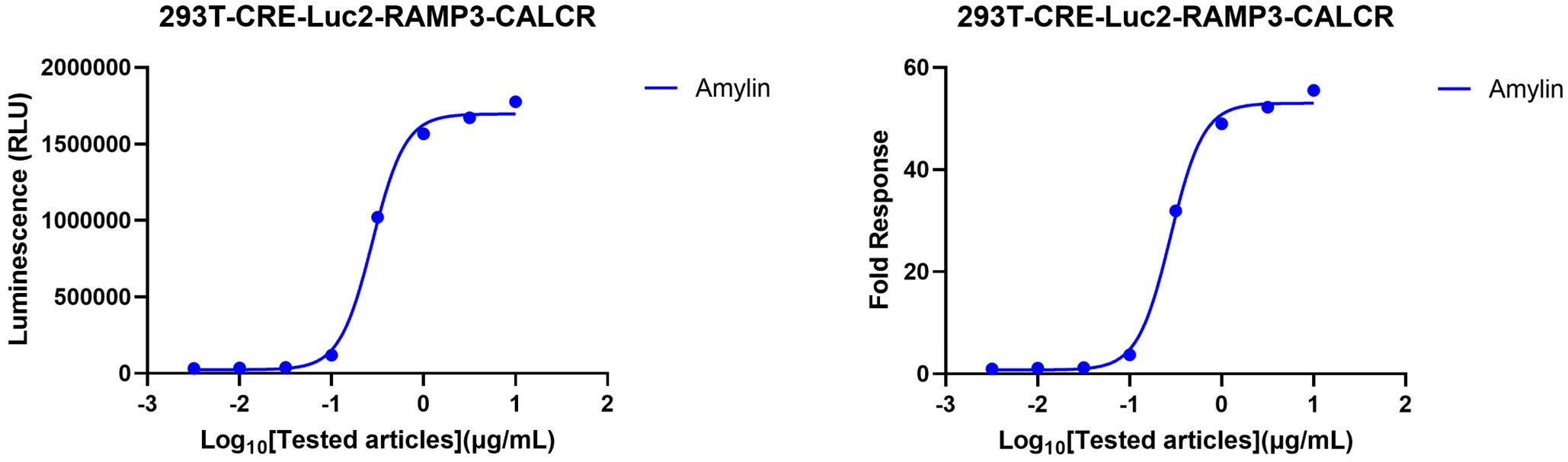
Figure 1: 293T-CRE-Luc2-RAMP3-CALCR cells were seeded into the 96-well plate, and treated with the highest concentration 10μg/mL Amylin, 3.16 times diluted to 8 concentrations. After reaction for 16 hours, readout with Bright-lite Luciferase Assay system.
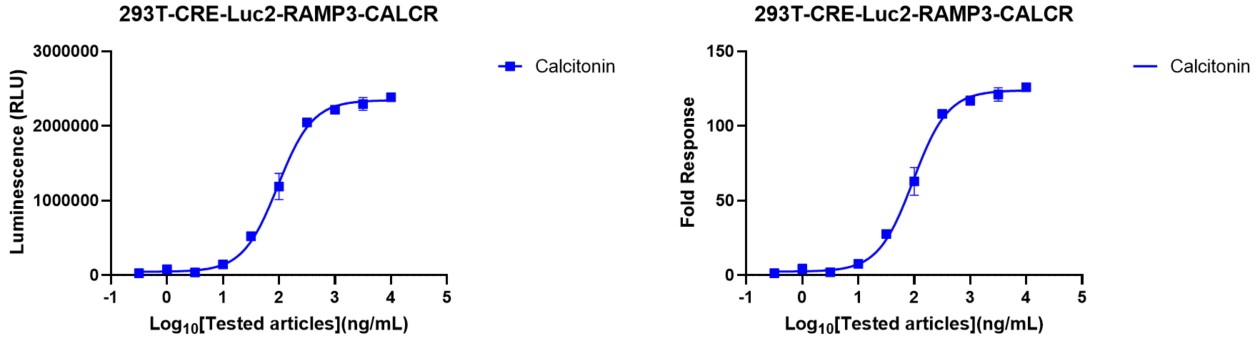
Figure 2: 293T-CRE-Luc2-RAMP3-CALCR cells were seeded into the 96-well plate, and treated with the highest concentration 10μg/mL Calcitonin, 3.16 times diluted to 10 concentrations. After reaction for 16 hours, readout with Bright-lite Luciferase Assay system.

Cell Resuscitation

  1. Pre-warm complete culture medium (basal medium and 10% FBS) in a 37°C water bath.
  2. Rapidly thaw the cryovial in a 37°C water bath for 1-2 minutes with gentle agitation.
  3. Transfer the vial to a biosafety cabinet, and disinfect the exterior with 70% ethanol.
  4. Aseptically transfer the cell suspension dropwise into a sterile centrifuge tube containing 9.0 mL of pre-warmed complete medium.
  5. Centrifuge at approximately 125 × g for 5–7 minutes at room temperature, carefully aspirate the supernatant without disturbing the cell pellet.
  6. Gently resuspend the pellet in an appropriate volume of complete medium and transfer the suspension into a T25 flask.
  7. Incubate the flask in a 37°C in a humidified 5% CO₂ incubator.
  8. Assess cell viability and morphology after 24 hours. If cells appear healthy, replace the medium with fresh medium supplemented with the appropriate selective antibiotic.
  9. Subculture the cells at a ratio of 1:5–1:8 every 2–3 days upon reaching 80%–90% confluency.

Cell Freezing

  1. Prepare the freezing medium (70% basal medium, 20% FBS and 10% DMSO) freshly before use.
  2. Pre-chill the freezing medium on ice and label the cryovials accordingly.
  3. Transfer the cell suspension to a sterile conical tube and perform a cell count to determine total viability and density.
  4. Centrifuge the cells at 250×g for 5 minutes at room temperature; carefully aspirate the supernatant.
  5. Gently resuspend the pellet in chilled freezing medium, ensuring a minimum cell density of 3×10⁶ cells/mL.
  6. Aliquot 1 mL of the cell suspension into each pre-labeled cryovial.
  7. Place the cryovials into a CoolCell® container and store at -80°C overnight for controlled-rate cooling.
  8. Transfer the cryovials to the liquid nitrogen for long-term storage the following day.

References

    Hay DL, et al. RAMPs: their role in GPCR signaling and pharmacology. Pharmacol Rev. 2016;68(2):505-533.

    Poyner DR, et al. Pharmacology of calcitonin and amylin receptors. Pharmacol Rev. 2002;54(2):233-255.

    Braymer J, et al. The amylin receptor: structure, signaling, and therapeutic potential. Trends Endocrinol Metab. 2021;32(10):704-718.

Use License Agreement

Research Use Only.
Not for use in diagnostic procedures or therapeutic applications.
Redistribution of the cell line or its derivatives is prohibited without prior written permission from Kyinno Biotechnology.