KC-7036

TMD8-BTK-C481S-KI-GFP-Luc2 Cell Line

×
69086
Home » TMD8-BTK-C481S-KI-GFP-Luc2 Cell Line

Background of TMD8-BTK-C481S-KI-GFP-Luc2 Cell Line

BTK, Bruton’s tyrosine kinase, is an essential intracellular kinase in B-cell receptor signaling pathway. BTK-C481S mutation replaces cysteine at position 481 in its kinase domain with serine; this residue serves as the core binding site for irreversible covalent BTK inhibitors. The mutation abrogates covalent binding while preserving BTK kinase activity, persistently activating downstream PLCγ2, ERK and NF-κB signaling and conferring acquired resistance of lymphoma to agents such as ibrutinib. TMD8-BTK-C481S-KI-GFP-Luc2 is an isogenic site-specific knock-in model constructed via CRISPR-Cas9 homology-directed repair using ABC subtype diffuse large B-cell lymphoma TMD8 cells. Dual reporter GFP and Luc2 are fused and co-expressed with BTK-C481S. GFP enables identification of edited positive cells and purity detection by flow cytometry, while Luc2 luciferase supports bioluminescence imaging for live cells in vitro and xenograft tumors in vivo to dynamically quantify tumor cell viability, proliferation and tumor burden. This model is applied for target validation and pharmacodynamic assessment of non-covalent BTK inhibitors and BTK PROTAC degraders. It provides visualizable cellular tool to investigate molecular resistance mechanisms of BTK-C481S and screen candidate small molecules overcoming drug resistance, avoiding nonphysiological expression bias derived from exogenous overexpression.

Specifications

Catalog NumberKC-7036
Cell Line NameTMD8-BTK-C481S-KI-GFP-Luc2 Cell Line
Clone Number5#
Host Cell LineTMD8-BTK-C481S-KI
DescriptionStable TMD8-BTK-C481S-KI cell line expressing exogenous luciferase and GFP gene
QuantityOne vial of frozen cells (≥2×10⁶ cells)
StabilityStable in culture over a minimum of 10 passages
ApplicationDrug screening and biological assays
Freezing Medium70% RPMI1640 + 20% FBS + 10% DMSO
Propagation MediumRPMI1640 + 10%FBS
Selection MarkerNA
MorphologyLymphoblast-like
SubcultureSplit saturated culture 1:4-1:5 every 3-4 days; seed out at about 1-3 × 10⁵ cells/mL
Incubation37 °C with 5% CO2
StorageLiquid nitrogen immediately upon receiving
Doubling TimeApproximately 40 hours
Mycoplasma StatusNegative

Cell Line Generation

TMD8-BTK-C481S-KI-GFP-Luc2 cell line was generated using a lentiviral vector expressing the luciferase and GFP sequence.

Characterization

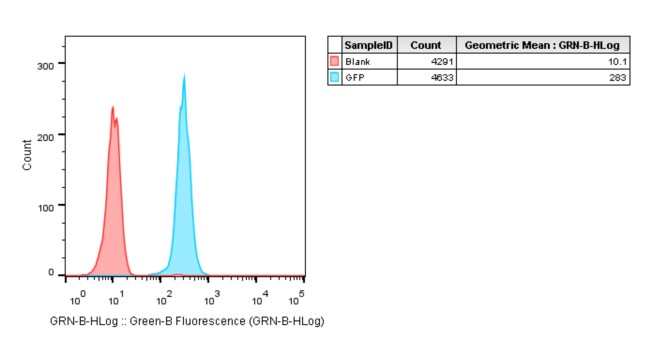
Figure 1: Characterization of GFP overexpression in the TMD8-BTK-C481S-KI-GFP-Luc2 stable clone using FACS.

Figure 2: Characterization of TMD8-BTK-C481S-KI-GFP-Luc2 stable clone using PCR sequencing.

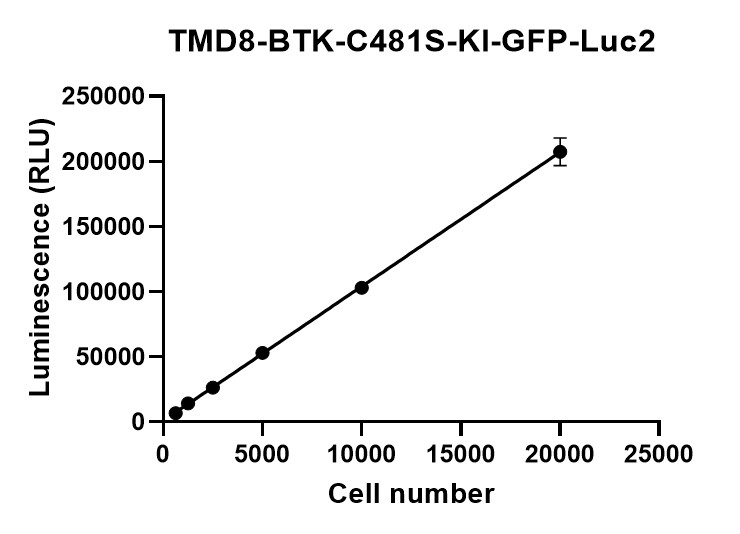
Figure 3: Characterization of luciferase expression in TMD8-BTK-C481S-KI-GFP-Luc2 stable clone using the Bright-Lite Luciferase Detection System.

Cell Resuscitation

  1. Prewarm culture medium (RPMI1640 + 10%FBS) in a 37°C water bath.
  2. Thaw the frozen vial in a 37°C water bath for 1-2 minutes.
  3. Transfer the vial into biosafety cabinet, and wipe the surface with 70% ethanol.
  4. Unscrew the top of the vial and transfer the cell suspension gently into a sterile centrifuge tube containing 9.0mL complete culture medium.
  5. Spin at ~ 125 × g for 5-7 minutes at room temperature, and discard the supernatant without disturbing the pellet.
  6. Resuspend cell pellet with the appropriate volume of complete medium and transfer the cell suspension into a T25 culture flask.
  7. Incubate the flask at 37°C, 5% CO2 incubator.
  8. Split saturated culture 1:4-1:5 every 3-4 days; seed out at about 1-3 × 10⁵ cells/mL.

Cell Freezing

  1. Prepare the freezing medium (70% RPMI1640 + 20% FBS + 10% DMSO) fresh immediately before use.
  2. Keep the freezing medium on ice and label cryovials.
  3. Transfer cells to a sterile, conical centrifuge tube, and count the cells.
  4. Centrifuge the cells at 250×g for 5 minutes at room temperature and carefully aspirate off the medium.
  5. Resuspend the cells at a density of at least 3×10⁶ cells/mL in chilled freezing medium.
  6. Aliquot 1 mL of the cell suspension into each cryovial.
  7. Freeze cells in the CoolCell freezing container overnight in a -80°C freezer.
  8. Transfer vials to liquid nitrogen for long-term storage

References

  1. Vihinen M, Zhou Y, Ren Y, et al. Pirtobrutinib targets BTK C481S in ibrutinib-resistant CLL but second-site BTK mutations lead to resistance. Blood Adv. 2022 Nov;7(11):1929-1943. doi:10.1182/bloodadvances.2022008447.
  2. Chen H, Petlak J, Gilliland DG, et al. NRX-0492 degrades wild-type and C481 mutant BTK and demonstrates in vivo activity in CLL patient-derived xenografts. Cell Chem Biol. 2022 Dec;29(12):1714-1727.e6. doi:10.1016/j.chembiol.2022.10.006.

Use License Agreement

Research Use Only.
Not for use in diagnostic procedures or therapeutic applications.
Redistribution of the cell line or its derivatives is prohibited without prior written permission from Kyinno Biotechnology.