KB-1996

S4B61-Rat IgG2a

×
64317
Home » S4B61-Rat IgG2a

Background of S4B61-Rat IgG2a

The S4B6 monoclonal antibody reacts with mouse interleukin-2 (IL-2). Mouse IL-2 is a 17 kDa factor produced mainly by activated CD4+ T cells. IL-2 induces cell cycle progression of resting cells in an antigen non-specific manner and allows clonal expansion of activated T cells. IL-2 also acts on activated B cells, monocytes, NK cells, LAK cells, and on oligodendroglial cells in vitro. In addition, IL-2 plays a role in hematopoiesis, tumor surveillance and anti-inflammatory reactions, making this cytokine a central regulator of the immune response. Non-glycosylated IL-2 is biologically active. The S4B6 antibody has been reported to have neutralizing activity. Studies have demonstrated that the S4B6 antibody binds a different epitope of IL-2 than JES6-1A12. In mice, S4B6 renders IL-2 incapable of binding to the high affinity IL-2R but maintains its ability to interact with the low affinity receptor. However, IL-2 bound to JES6-1A12 can still interact with the high affinity IL-2R.

Specifications

Catalog NumberKB-1996
Antibody NameS4B61-Rat IgG2a
IsotypeRat IgG2a,kappa
FC MuationsWild Type
TargetMouse IL2
Species ReactivityMouse
Host Cell LineEXPI CHO
Purification MethodAffinity purified
Concentration>2 mg/mL
Formulation1xPBS or any specified formulation
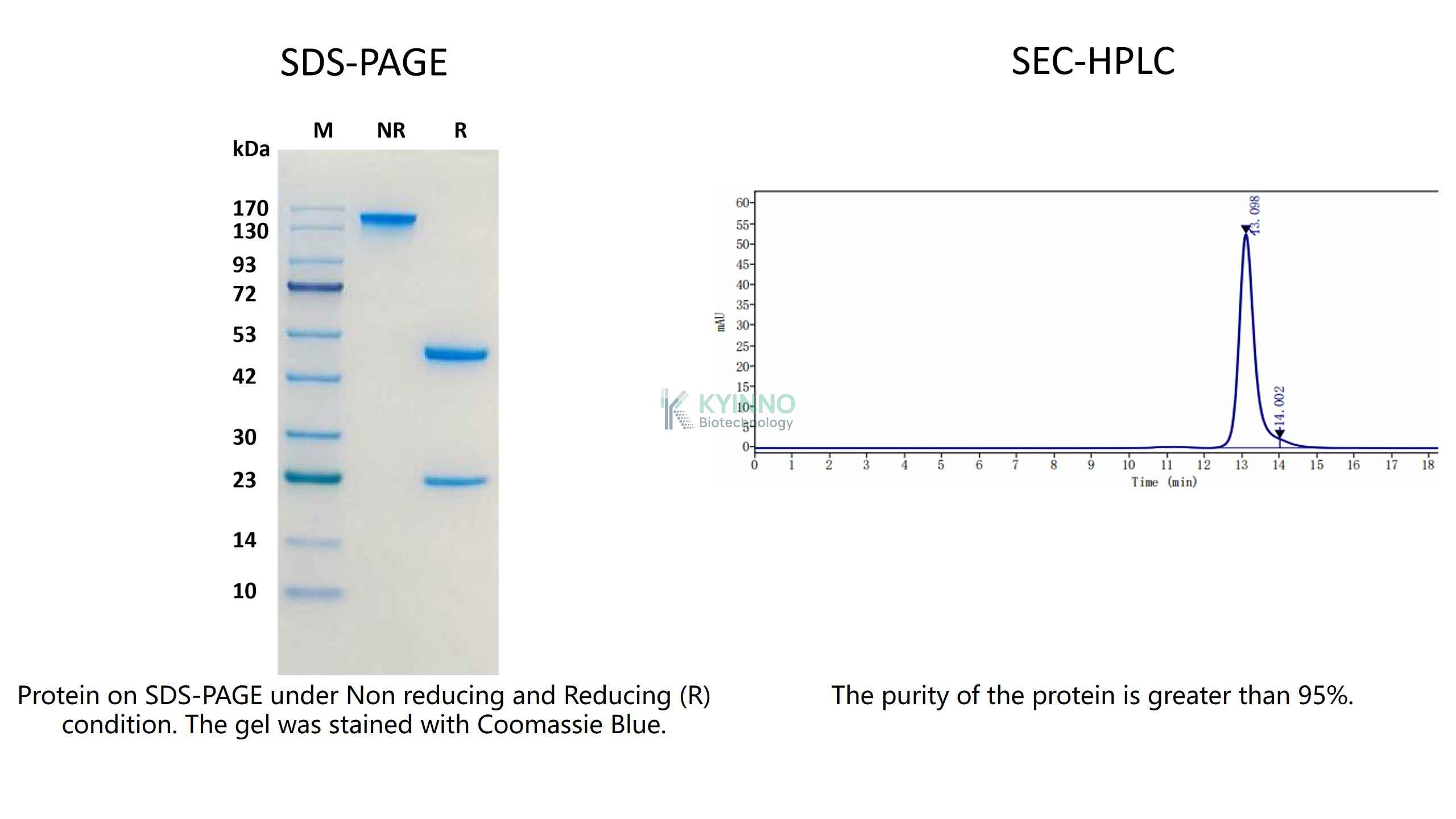
Purity>95% by SDS-PAGE and SEC-HPLC
ValidationELISA
Endotoxin Level<0.2 EU/mg as determined by the LAL method
Sterility0.2μm filtered
StorageIt is recommended that the protein should be aliquoted for optimal storage.
Avoid repeated freeze-thaw cycles.
StabilityStable for twelve months from date of receipt when stored at -20°C to -80°C;
Stored at 2-8°C for one month without detectable loss of activity.

Characterization

Application

References

  1. Pan H, Lu HM, Hu WM, Tian BL, Liu XB, Zhang ZD, Mai G. Anti-CD25 mAb, anti-IL2 mAb, and IL2 block tolerance induction through anti-CD154 mAb and rapamycin in xenogeneic islet transplantation. Transplant Proc. 2007 Dec;39(10):3452-4.
  2. Pierson W, Cauwe B, Policheni A, Schlenner SM, Franckaert D, Berges J, Humblet-Baron S, Schönefeldt S, Herold MJ, Hildeman D, Strasser A, Bouillet P, Lu LF, Matthys P, Freitas AA, Luther RJ, Weaver CT, Dooley J, Gray DH, Liston A. Antiapoptotic Mcl-1 is critical for the survival and niche-filling capacity of Foxp3⁺ regulatory T cells. Nat Immunol. 2013 Sep;14(9):959-65.

Use License Agreement

Research Use Only.
Not for use in diagnostic procedures or therapeutic applications.