KC-7027

293T-HA-dog-DLL3 Cell Line

×
68826
Home » 293T-HA-dog-DLL3 Cell Line

Background of 293T-HA-dog-DLL3 Cell Line

Canine delta-like canonical Notch ligand 3 gene (dog-DLL3) is a conserved non-canonical Notch ligand-encoding gene in canines. Its transcript encodes a single-pass transmembrane glycoprotein consisting of a conserved DSL domain, epidermal growth factor-like repeats and intracellular terminal domain. Different from canonical Notch ligands, dog-DLL3 negatively regulates the Notch signaling pathway mainly through cell-autonomous cis-inhibition rather than mediating intercellular activation signals. It is specifically expressed during canine embryonic somitogenesis, mesodermal differentiation and neurogenesis, and maintains segmentation clock homeostasis to modulate vertebral and thoracic skeletal morphogenesis as well as the balance of neural stem cell proliferation and differentiation. Splice site variations and loss-of-function mutations of dog-DLL3 induce canine spondylocostal dysostosis, causing abnormal somite segmentation and skeletal malformations. Its aberrant expression modulates tumor epithelial-mesenchymal transition and participates in the progression of canine neuroendocrine tumors. As a core gene for canine developmental biology and veterinary oncology research, dog-DLL3 provides a critical molecular basis for elucidating the pathogenesis of canine skeletal developmental defects and developing veterinary tumor targeting targets.

Specifications

Catalog NumberKC-7027
Cell Line Name293T-HA-dog-DLL3 Cell Line
NCBI/UniProt Accession NumberA0A8I3MXZ5
Clone Number2#
Host Cell Line293T
DescriptionStable 293T cell line expressing exogenous dog-DLL3 gene with N‑terminal HA tag.
QuantityOne vial of frozen cells (≥2×10⁶ cells)
StabilityStable in culture over a minimum of 10 passages
ApplicationDrug screening and biological assays
Freezing Medium70% DMEM + 20% FBS + 10% DMSO
Propagation MediumDMEM + 10% FBS + 1 μg/mL Puromycin
Selection MarkerPuromycin
MorphologyEpithelial
SubcultureSplit saturated culture 1:4-1:8 every 2-3 days; seed out at about 1-3 × 10⁵ cells/mL
Incubation37 °C with 5% CO2
StorageLiquid nitrogen immediately upon receiving
Doubling TimeApproximately 30 hours
Mycoplasma StatusNegative

Cell Line Generation

293T‑HA‑dog‑DLL3 cell line was generated using a lentiviral vector expressing the N‑terminal HA‑tagged dog-DLL3 sequence.

Characterization

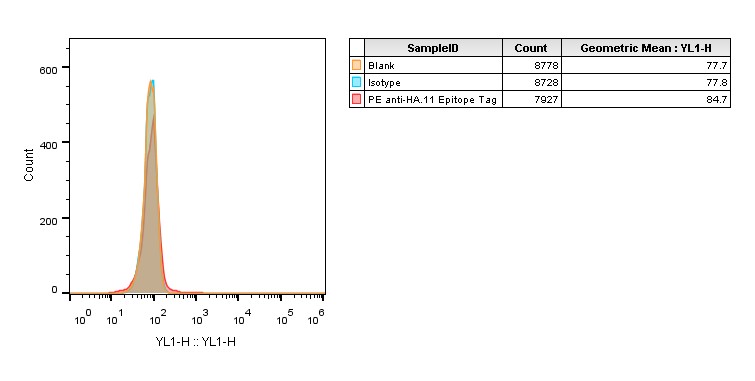
Figure 1: Characterization of endogenous expression in parental 293T cells using FACS with anti-HA tag antibody.

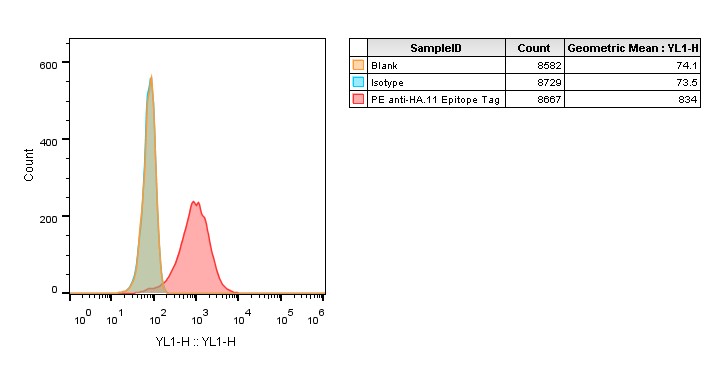
Figure 2: Characterization of HA-dog-DLL3 overexpression in the 293T‑HA‑dog‑DLL3 stable clone using FACS with anti-HA tag antibody.

Figure 3: Characterization of HA‑dog‑DLL3 in the 293T‑HA‑dog‑DLL3 stable clone using PCR sequencing.

Cell Resuscitation

  1. Prewarm culture medium (DMEM + 10% FBS + 1 μg/mL Puromycin) in a 37°C water bath.
  2. Thaw the frozen vial in a 37°C water bath for 1-2 minutes.
  3. Transfer the vial into biosafety cabinet, and wipe the surface with 70% ethanol.
  4. Unscrew the top of the vial and transfer the cell suspension gently into a sterile centrifuge tube containing 9.0mL complete culture medium.
  5. Spin at ~ 125 × g for 5-7 minutes at room temperature, and discard the supernatant without disturbing the pellet.
  6. Resuspend cell pellet with the appropriate volume of complete medium and transfer the cell suspension into a T25 culture flask.
  7. Incubate the flask at 37°C, 5% CO2 incubator.
  8. Split saturated culture 1:4-1:8 every 2-3 days; seed out at about 1-3 × 10⁵ cells/mL.

Cell Freezing

  1. Prepare the freezing medium (70% DMEM + 20% FBS + 10% DMSO) fresh immediately before use.
  2. Keep the freezing medium on ice and label cryovials.
  3. Transfer cells to a sterile, conical centrifuge tube, and count the cells.
  4. Centrifuge the cells at 250×g for 5 minutes at room temperature and carefully aspirate off the medium.
  5. Resuspend the cells at a density of at least 3×10⁶ cells/mL in chilled freezing medium.
  6. Aliquot 1 mL of the cell suspension into each cryovial.
  7. Freeze cells in the CoolCell freezing container overnight in a -80°C freezer.
  8. Transfer vials to liquid nitrogen for long-term storage.

References

  1. Yanagihara T, Tsubouchi K, Zhou Q, Chong M, Otsubo K, Isshiki T, Schupp JC, Sato S, Scallan C, Upagupta C, Revill S, Ayoub A, Chong SG, Dvorkin-Gheva A, Kaminski N, Tikkanen J, Keshavjee S, Paré G, Guignabert C, Ask K, Kolb MRJ. Vascular-Parenchymal Cross-Talk Promotes Lung Fibrosis through BMPR2 Signaling. Am J Respir Crit Care Med. 2023 Jun 1;207(11):1498-1514. doi: 10.1164/rccm.202109-2174OC. PMID: 36917778.
  2. Bannasch D, Letko A, Jagannathan V. Canine DLL3 variants and their impact on somitogenesis and vertebral malformation. BMC Genomics. 2022 Aug 12;23(1):589. doi:10.1186/s12864-022-08812-9. PMID: 35963987.

Use License Agreement

Research Use Only.
Not for use in diagnostic procedures or therapeutic applications.
Redistribution of the cell line or its derivatives is prohibited without prior written permission from Kyinno Biotechnology.