KC-6750
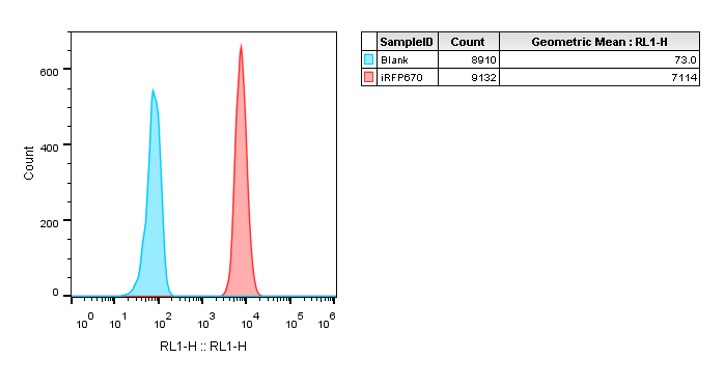
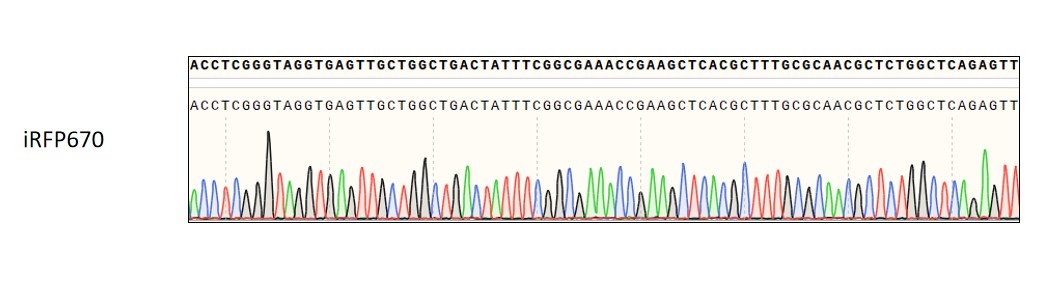
iRFP670 is a near-infrared fluorescent protein engineered from a bacterial phytochrome. It incorporates biliverdin as its chromophore and can be detected using appropriately matched excitation and emission filters. Its longer-wavelength fluorescence supports cell tracking and multicolor imaging, including applications in living animals. Fluorescence depends on protein expression, chromophore availability, tissue depth and instrument settings. It is a labeling protein rather than a human disease-target gene.
| Catalog Number | KC-6750 |
|---|---|
| Cell Line Name | THP-1-iRFP670 Cell Line |
| NCBI/UniProt Accession Number | N/A |
| Clone Number | 8# |
| Host Cell Line | THP-1 |
| Description | Stable THP-1 cell line expressing iRFP670 |
| Quantity | One vial of frozen cells (≥2×10⁶ cells) |
| Stability | Stable in culture over a minimum of 10 passages |
| Application | Drug screening and biological assays |
| Freezing Medium | 70% RPMI 1640+20% FBS+10% DMSO |
| Propagation Medium | RPMI1640+10%FBS |
| Selection Marker | NA |
| Morphology | Lymphoblast-like |
| Subculture | Split at a ratio of 1:3–1:6 every 2–3 days |
| Incubation | 37°C with 5% CO₂ |
| Storage | Liquid nitrogen immediately upon receiving |
| Doubling Time | Estimated 19–45 hours |
| Mycoplasma Status | Negative |
| In Vivo Validation | NA |