KC-6580

THP-1-CLEC1B-DsRed-Medium Cell Line

×
64569
Home » THP-1-CLEC1B-DsRed-Medium Cell Line

Background of THP-1-CLEC1B-DsRed-Medium Cell Line

CLEC1B encodes C-type lectin domain family 1 member B and is also known as CLEC2. Natural killer (NK) cells express multiple calcium-dependent (C-type) lectin-like receptors, such as CD94 (KLRD1; MIM 602894) and NKG2D (KLRC4; MIM 602893), that interact with major histocompatibility complex class I molecules and either inhibit or activate cytotoxicity and cytokine secretion. CLEC2 is a C-type lectin-like receptor expressed in myeloid cells and NK cells (Colonna et al., 2000 [PubMed 10671229]).[supplied by OMIM, Jan 2011]

Specifications

Catalog NumberKC-6580
Cell Line NameTHP-1-CLEC1B-DsRed-Medium Cell Line
NCBI/UniProt Accession NumberNM_016509.3
Clone Number6#
Host Cell LineTHP-1
DescriptionTHP-1-CLEC1B-DsRed-Medium is a stable engineered cell line expressing human CLEC1B-DsRed
QuantityOne vial of frozen cells (≥2×10⁶ cells/vial)
StabilityStable in culture over a minimum of 10 passages
ApplicationDrug screening and biological assays
Freezing Medium70% RPMI1640+20% FBS+10% DMSO
Propagation MediumRPMI1640+10%FBS+1μg/mL puromycin
Selection MarkerPuromycin
MorphologyMonocyte
SubcultureSplit at a ratio of 1:4–1:6 every 2–3 days
Incubation37 °C with 5% CO₂
StorageLiquid nitrogen immediately upon receiving
Doubling TimeEstimated 19–36 hours
Mycoplasma StatusNegative
In Vivo ValidationNA

Cell Line Generation

THP-1-CLEC1B-DsRed-Medium cell line was generated using a lentiviral vector expressing the human CLEC1B-DsRed sequence.

Characterization

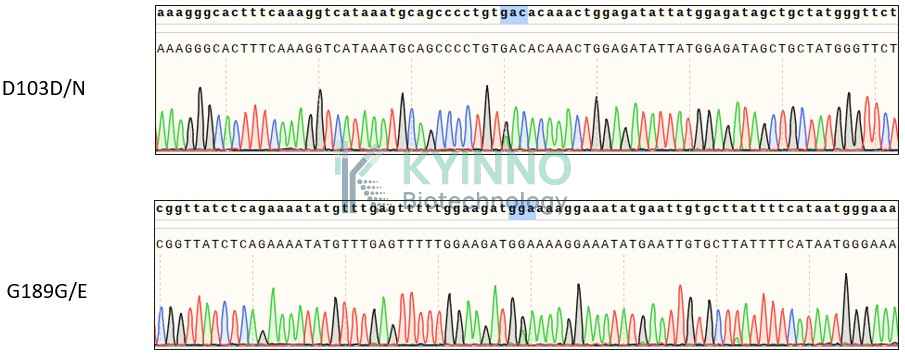
Figure 1:Characterization of CLEC1B and DsRed in the THP-1-CLEC1B-DsRed-Medium stable clone using PCR sequencing.

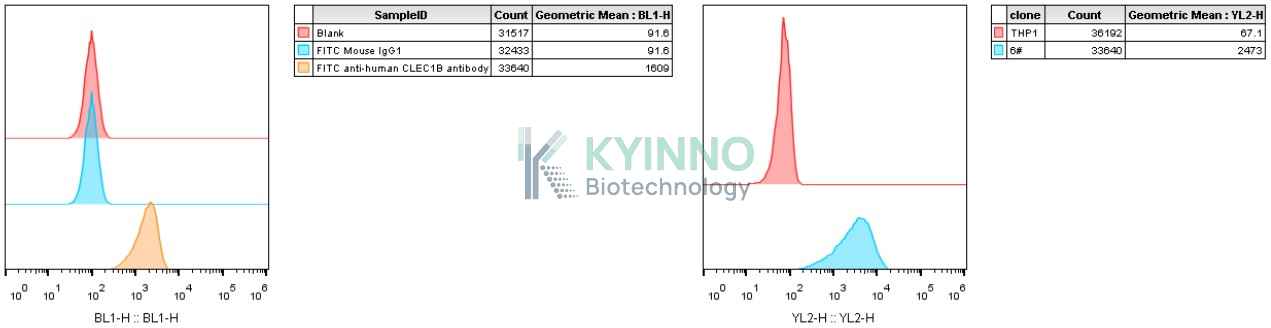
Figure 2. Characterization of CLEC1B and DsRed overexpression in the THP-1-CLEC1B-DsRed-Medium stable clone using FACS.

Cell Resuscitation

  1. Pre-warm complete culture medium (basal medium and 10% FBS) in a 37°C water bath.
  2. Rapidly thaw the cryovial in a 37°C water bath for 1-2 minutes with gentle agitation.
  3. Transfer the vial to a biosafety cabinet, and disinfect the exterior with 70% ethanol.
  4. Aseptically transfer the cell suspension dropwise into a sterile centrifuge tube containing 9.0 mL of pre-warmed complete medium.
  5. Centrifuge at approximately 125 × g for 5–7 minutes at room temperature, carefully aspirate the supernatant without disturbing the cell pellet.
  6. Gently resuspend the pellet in an appropriate volume of complete medium and transfer the suspension into a T25 flask.
  7. Incubate the flask in a 37°C in a humidified 5% CO₂ incubator.
  8. Assess cell viability and morphology after 24 hours. If cells appear healthy, replace the medium with fresh medium supplemented with the appropriate selective antibiotic.
  9. Subculture the cells at a ratio of 1:4–1:6 every 2–3 days upon reaching 80%–90% confluency.

Cell Freezing

  1. Prepare the freezing medium (70% basal medium, 20% FBS and 10% DMSO) freshly before use.
  2. Pre-chill the freezing medium on ice and label the cryovials accordingly.
  3. Transfer the cell suspension to a sterile conical tube and perform a cell count to determine total viability and density.
  4. Centrifuge the cells at 250×g for 5 minutes at room temperature; carefully aspirate the supernatant.
  5. Gently resuspend the pellet in chilled freezing medium, ensuring a minimum cell density of 3×10⁶ cells/mL.
  6. Aliquot 1 mL of the cell suspension into each pre-labeled cryovial.
  7. Place the cryovials into a CoolCell® container and store at -80°C overnight for controlled-rate cooling.
  8. Transfer the cryovials to the liquid nitrogen for long-term storage the following day.

References

  1. Khojand S, Zahmatkesh N, Hassani A et al. Identification of STEAP4, EPC1, and CLEC1B as non-invasive candidate biomarkers for hepatocellular carcinoma using integrated bioinformatics analysis. Biotechnology reports (Amsterdam, Netherlands). 2026 Jun;50:e00953. PMID: 41909879. doi: 10.1016/j.btre.2026.e00953.
  2. Yang L, Yang Y, Wang Q et al. Dendropanax proteus root and its major bio-phytochemicals alleviate rheumatoid arthritis by inhibiting TLR4/CLEC1B/PI3K/Akt/NF-κB pathways: proteomics, metabolomics, collagen-induced arthritis rats, MH7A cells, molecular docking, and molecular dynamic simulation. Journal of ethnopharmacology. 2026 Feb 28;357:120903. PMID: 41242509. doi: 10.1016/j.jep.2025.120903.
  3. Yamazaki E, Ikeda K, Urata R et al. Endothelial CLEC-1b plays a protective role against cancer hematogenous metastasis. Biochemical and biophysical research communications. 2024 May 14;708:149819. PMID: 38531221. doi: 10.1016/j.bbrc.2024.149819.

Use License Agreement

Research Use Only.
Not for use in diagnostic procedures or therapeutic applications.
Redistribution of the cell line or its derivatives is prohibited without prior written permission from Kyinno Biotechnology.