KITLG encodes KIT ligand and is also known as SF. This ligand is a pleiotropic factor that acts in utero in germ cell and neural cell development, and hematopoiesis, all believed to reflect a role in cell migration. In adults, it functions pleiotropically, while mostly noted for its continued requirement in hematopoiesis. Two transcript variants encoding different isoforms have been found for this gene.
Specifications
Catalog Number
KC-5452
Cell Line Name
293T-SCF220 Cell Line
NCBI/UniProt Accession Number
NM_003994.6
Clone Number
8#
Host Cell Line
293T
Description
293T-SCF220 is a stable engineered cell line expressing human SCF220
Quantity
One vial of frozen cells (≥2×10⁶ cells/vial)
Stability
Stable in culture over a minimum of 10 passages
Application
Drug screening and biological assays
Freezing Medium
70% DMEM+20% FBS+10% DMSO
Propagation Medium
DMEM+10%FBS+1μg/mL puromycin
Selection Marker
Puromycin
Morphology
Epithelial
Subculture
Split at a ratio of 1:4–1:6 every 2–3 days
Incubation
37 °C with 5% CO₂
Storage
Liquid nitrogen immediately upon receiving
Doubling Time
Estimated 19–36 hours
Mycoplasma Status
Negative
In Vivo Validation
NA
Cell Line Generation
293T-SCF220 cell line was generated using a lentiviral vector expressing the human SCF220 sequence.
Characterization
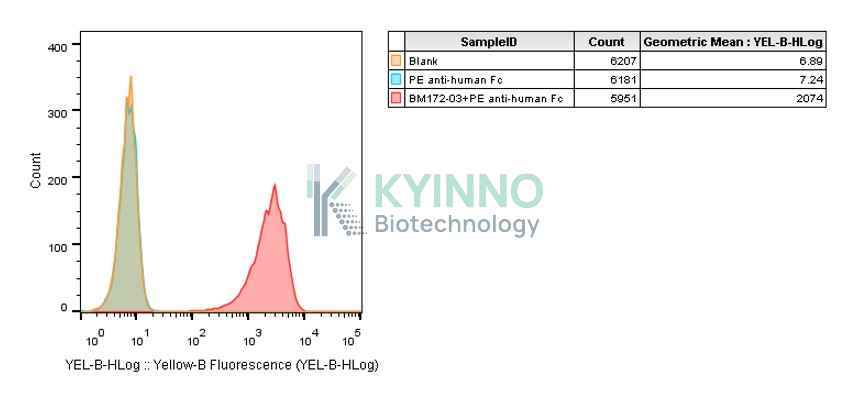
Figure 1. Characterization of SCF220 over-expression in the 293T-SCF220 stable clone using FACS.
Figure 2. Characterization of 293T-SCF220 cell line stable clone using PCR sequencing.
Cell Resuscitation
Pre-warm complete culture medium (basal medium and 10% FBS) in a 37°C water bath.
Rapidly thaw the cryovial in a 37°C water bath for 1-2 minutes with gentle agitation.
Transfer the vial to a biosafety cabinet, and disinfect the exterior with 70% ethanol.
Aseptically transfer the cell suspension dropwise into a sterile centrifuge tube containing 9.0 mL of pre-warmed complete medium.
Centrifuge at approximately 125 × g for 5–7 minutes at room temperature, carefully aspirate the supernatant without disturbing the cell pellet.
Gently resuspend the pellet in an appropriate volume of complete medium and transfer the suspension into a T25 flask.
Incubate the flask in a 37°C in a humidified 5% CO₂ incubator.
Assess cell viability and morphology after 24 hours. If cells appear healthy, replace the medium with fresh medium supplemented with the appropriate selective antibiotic.
Subculture the cells at a ratio of 1:4–1:6 every 2–3 days upon reaching 80%–90% confluency.
Cell Freezing
Prepare the freezing medium (70% basal medium, 20% FBS and 10% DMSO) freshly before use.
Pre-chill the freezing medium on ice and label the cryovials accordingly.
Transfer the cell suspension to a sterile conical tube and perform a cell count to determine total viability and density.
Centrifuge the cells at 250×g for 5 minutes at room temperature; carefully aspirate the supernatant.
Gently resuspend the pellet in chilled freezing medium, ensuring a minimum cell density of 3×10⁶ cells/mL.
Aliquot 1 mL of the cell suspension into each pre-labeled cryovial.
Place the cryovials into a CoolCell® container and store at -80°C overnight for controlled-rate cooling.
Transfer the cryovials to the liquid nitrogen for long-term storage the following day.
References
Qin JX, Cai ZL, Yang YF et al. Association between KITLG Gene Polymorphisms and Testicular Germ Cell Tumors: A Systematic Review and Meta-analysis. Current medical science. 2019 Oct;39(5):702-706. PMID: 31612386. doi: 10.1007/s11596-019-2095-2.
Gorssen W, Kadri NK, Khayatzadeh N et al. Genetic analysis of iris pigmentation in Swiss pig breeds identifies a missense KITLG variant as a potential causal factor for pale and heterochromatic irises. Genetics, selection, evolution : GSE. 2026 Mar 25;58(1):. PMID: 41882519. doi: 10.1186/s12711-026-01040-1.
Wu B, He M, Liu T et al. New variant in KITLG shapes the pathogenesis of familial progressive hyper- and hypo-pigmentation. Molecular genetics and genomics : MGG. 2026 Mar 4;301(1):. PMID: 41779177. doi: 10.1007/s00438-026-02373-8.
Use License Agreement
Research Use Only.
Not for use in diagnostic procedures or therapeutic applications.
Redistribution of the cell line or its derivatives is prohibited without prior written permission from Kyinno Biotechnology.