KC-2057

293T-SRF-RE-luc2-Cell-Line

×
23316
Home » 293T-SRF-RE-luc2-Cell-Line

Background of 293T-SRF-RE-luc2-Cell-Line

Serum response factor (SRF) is a highly conserved transcription factor across species from yeast to humans, playing a pivotal role in mediating the transmission of mechanical signals from the cytoplasmic actin network and extracellular milieu to the cell nucleus. It serves as a central hub in numerous mechanotransduction pathways, governing the transcription of an estimated 300 genes, with direct interaction with over 200 of these genes.

Specifications

Catalog NumberKC-2057
Cell Line Name293T-SRF-RE-luc2-Cell-Line
Host Cell Line293T
Description293T cell line stable expressing exogenous luciferase gene under the control of SRF-RE responsive element.
QuantityOne vial of frozen cells (≥2×10⁶ cells)
StabilityStable in culture over a minimum of 10 passages
ApplicationDrug screening and biological assays
Freezing Medium70% DMEM+20% FBS+10% DMSO
Propagation MediumDMEM+10% FBS+150µg/mL Hygromycin B
Selection MarkerHygromycin B
MorphologyEpithelial
SubcultureSplit saturated culture 1:4-1:5 every 2-3 days; seed out at about 1-3 × 10⁵ cells/mL
Incubation37 °C with 5% CO2
StorageLiquid nitrogen immediately upon receiving
Doubling TimeApproximately 30 hours
Mycoplasma StatusNegative
In Vivo ValidationNA

Cell Line Generation

293T-SRF-RE-luc2 reporter cell line was generated using lentivirus methods.

Characterization

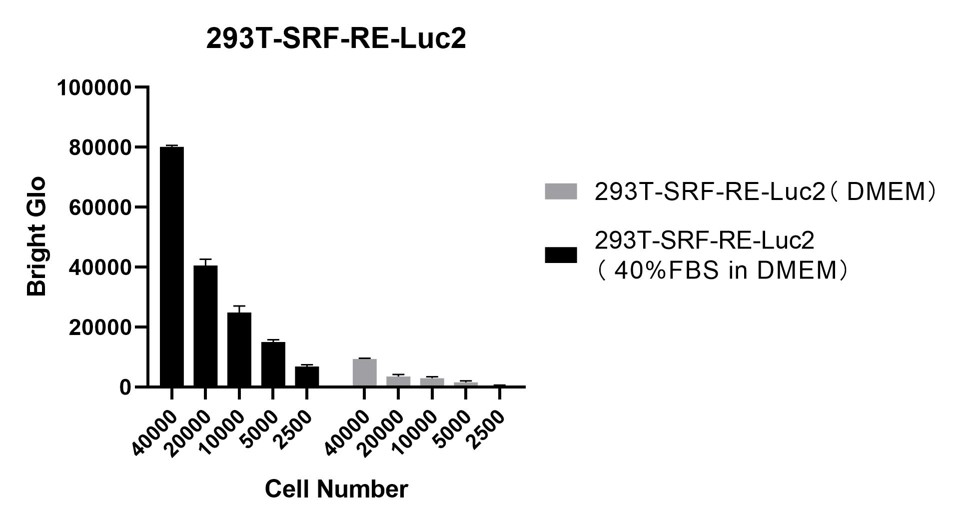
Figure 1. 293T-SRF-RE-luc2 reporter cells were seeded into the 96-well plate 6 hours, then readout with Bright-Glo system.

Cell Resuscitation

1. Prewarm culture medium (DMEM supplemented with 10% FBS, 150µg/mL Hygromycin B)in a 37°C water bath.
2. Thaw the frozen vial in a 37°C water bath for 1-2 minutes.
3. Transfer the vial into biosafety cabinet, and wipe the surface with 70% ethanol.
4. Unscrew the top of the vial and transfer the cell suspension gently into a sterile centrifuge tube containing 9.0mL complete culture medium.
5. Spin at ~ 125 × g for 5-7 minutes at room temperature, and discard the supernatant without disturbing the pellet.
6. Resuspend cell pellet with the appropriate volume of complete medium and transfer the cell suspension into a T25 culture flask.
7. Incubate the flask at 37°C, 5% CO2 incubator.
8. Split saturated culture 1:4-1:5 every 2-3 days; seed out at about 1-3 × 10⁵ cells/mL.

Cell Freezing

1. Prepare the freezing medium (70% DMEM + 20% FBS + 10% DMSO) fresh immediately before use.
2. Keep the freezing medium on ice and label cryovials.
3. Transfer cells to a sterile, conical centrifuge tube, and count the cells.
4. Centrifuge the cells at 250×g for 5 minutes at room temperature and carefully aspirate off the medium.
5. Resuspend the cells at a density of at least 3×10⁶ cells/mL in chilled freezing medium.
6. Aliquot 1 mL of the cell suspension into each cryovial.
7. Freeze cells in the CoolCell freezing container overnight in a -80°C freezer.
8. Transfer vials to liquid nitrogen for long-term storage.

References

1.Olson EN, and Nordheim A. Linking actin dynamics and gene transcription to drive cellular motile functions. Nat. Rev. Mol. Cell Biol. 2010; 11(5):353-65.
2. Cooper SJ, Trinklein ND, Nguyen L, and Myers RM. Serum response factor binding sites differ in three human cell types. Genome Res. 2007; 17(2):136-44.

Use License Agreement

Research Use Only.
Not for use in diagnostic procedures or therapeutic applications.
Redistribution of the cell line or its derivatives is prohibited without prior written permission from Kyinno Biotechnology.