KC-7071

293T-rat-NPR2-Flag Cell Line

×
71822
Home » 293T-rat-NPR2-Flag Cell Line

Background of 293T-rat-NPR2-Flag Cell Line

Rat NPR2, also known as natriuretic peptide receptor B (GC-B), is a transmembrane receptor guanylyl cyclase encoded in rat. Its extracellular ligand-binding domain specifically recognizes C-type natriuretic peptide (CNP). A single transmembrane helix connects the intracellular kinase homology domain and guanylyl cyclase catalytic domain. Ligand binding activates the catalytic domain, converting GTP into second messenger cGMP and triggering downstream signaling cascades. This receptor is widely expressed in rat ovarian granulosa cells, chondrocytes, neurons, epididymal epithelium and cardiomyocytes, participating in endochondral ossification, oocyte meiotic arrest, sperm maturation, sensory axon remodeling and cardiovascular homeostasis. Luteinizing hormone (LH) induces dephosphorylation of NPR2 in rat follicles, reducing guanylyl cyclase activity and intracellular cGMP concentration to release meiotic inhibition of oocytes. Rat NPR2 serves as a key molecular tool for investigating CNP-cGMP pathway, acromesomelic dysplasia, reproductive regulation and pain signaling. It is applied in in vitro functional validation and in vivo pharmacological evaluation, providing a robust rodent model for cross-species translational target research.

Specifications

Catalog NumberKC-7071
Cell Line Name293T-rat-NPR2-Flag Cell Line
NCBI/UniProt Accession NumberNM_053838.1
Clone Number1#
Host Cell Line293T
DescriptionStable 293T clone expressing exogenous rat-NPR2-Flag gene
QuantityOne vial of frozen cells (≥2×10⁶ cells)
StabilityStable in culture over a minimum of 10 passages
ApplicationDrug screening and biological assays
Freezing Medium70% DMEM + 20% FBS + 10% DMSO
Propagation MediumDMEM + 10% FBS + 1 μg/mL Puromycin
Selection MarkerPuromycin
MorphologyEpithelial
SubcultureSplit saturated culture 1:4-1:8 every 2-3 days
Incubation37 °C with 5% CO2
StorageLiquid nitrogen immediately upon receiving
Doubling TimeApproximately 30 hours
Mycoplasma StatusNegative

Cell Line Generation

293T-rat-NPR2-Flag cell line was generated using a lentiviral vector expressing the rat-NPR2-Flag sequence.

Characterization

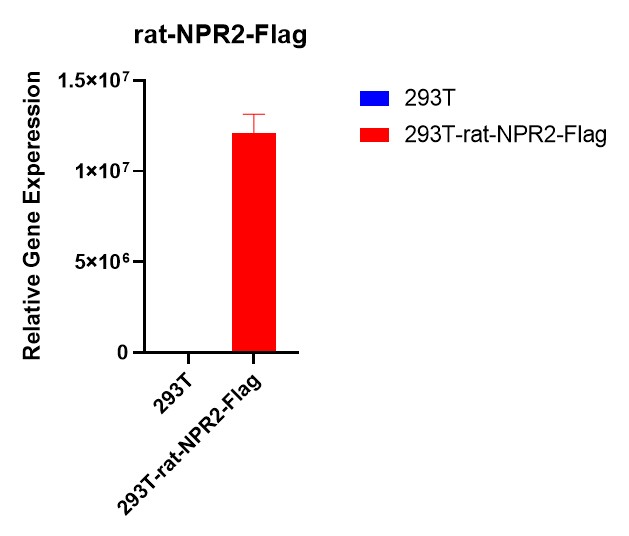
Figure 1: Characterization of rat-NPR2-Flag overexpression in the 293T-rat-NPR2-Flag stable clone using qPCR.

Figure 2: Characterization of rat-NPR2-Flag in the 293T-rat-NPR2-Flag stable clone using PCR sequencing.

Cell Resuscitation

  1. Pre-warm complete culture medium (DMEM + 10% FBS + 1 μg/mL Puromycin) in a 37°C water bath.
  2. Rapidly thaw the cryovial in a 37°C water bath for 1-2 minutes with gentle agitation.
  3. Transfer the vial to a biosafety cabinet, and disinfect the exterior with 70% ethanol.
  4. Aseptically transfer the cell suspension dropwise into a sterile centrifuge tube containing 9.0 mL of pre-warmed complete medium.
  5. Centrifuge at approximately 125 × g for 5–7 minutes at room temperature, carefully aspirate the supernatant without disturbing the cell pellet.
  6. Gently resuspend the pellet in an appropriate volume of complete medium and transfer the suspension into a T25 flask.
  7. Incubate the flask in a 37°C in a humidified 5% CO2 incubator.
  8. Assess cell viability and morphology after 24 hours. If cells appear healthy, replace the medium with fresh medium supplemented with the appropriate selective antibiotic.
  9. Subculture the cells at a ratio of 1:4-1:8 every 2-3 days upon reaching 80%–90% confluency.

Cell Freezing

  1. Prepare the freezing medium (70% DMEM + 20% FBS + 10% DMSO) freshly before use.
  2. Pre-chill the freezing medium on ice and label the cryovials accordingly.
  3. Transfer the cell suspension to a sterile conical tube and perform a cell count to determine total viability and density.
  4. Centrifuge the cells at 250×g for 5 minutes at room temperature; carefully aspirate the supernatant.
  5. Gently resuspend the cell pellet in chilled freezing medium, ensuring a minimum cell density of 3×10⁶ cells/mL.
  6. Aliquot 1 mL of the cell suspension into each pre-labeled cryovial.
  7. Place the cryovials into a CoolCell® container and store at -80°C overnight for controlled-rate cooling.
  8. Transfer the cryovials to the liquid nitrogen for long-term storage the following day.

References

  1. Zhang Y, et al. CNP/NPR2-cGMP signaling modulates sperm maturation in rat epididymis. Int J Mol Sci. 2023;24(6):5218. doi:10.3390/ijms24065218.
  2. Egbert JR, et al. Phosphatases modified by LH signaling in ovarian follicles: testing their role in regulating the NPR2 guanylyl cyclase. Biol Reprod. 2023;109(6):1124-1137. doi:10.1093/biolre/ioad168.

Use License Agreement

Research Use Only.
Not for use in diagnostic procedures or therapeutic applications.
Redistribution of the cell line or its derivatives is prohibited without prior written permission from Kyinno Biotechnology.