KC-1775

293T-mouse-IL11RA-Cell-Line

×
22777
Home » 293T-mouse-IL11RA-Cell-Line

Background of 293T-mouse-IL11RA-Cell-Line

IL11RA (Interleukin 11 Receptor Subunit Alpha), also known as IL-11RA, IL-11Rα, or IL-11 receptor alpha chain, is a type I cytokine receptor that binds interleukin-11 (IL-11). It is widely expressed in fibroblasts, epithelial cells, and hematopoietic cells. Upon IL-11 binding, IL11RA forms a complex with gp130 (IL6ST) and activates JAK-STAT3 signaling. Dysregulation of IL-11/IL11RA signaling is implicated in inflammation, fibrosis, and various cancers, including gastric, colorectal, and breast cancer. Mutations in IL11RA cause craniosynostosis and dental anomalies. Therapeutic strategies include anti-IL-11 antibodies (e.g., X203, LASN01) and IL11RA-Fc fusion proteins, which are in clinical trials for fibrotic diseases and cancer.

Specifications

Catalog NumberKC-1775
Cell Line Name293T-mouse-IL11RA-Cell-Line
NCBI/UniProt Accession NumberNM_010549.3
Clone Number1#
Host Cell LineHuman HEK293T cell line
DescriptionStable 293T cell line expressing exogenous mouse IL11RA gene
QuantityOne vial of frozen cells (≥2×10⁶ cells)
StabilityStable in culture over a minimum of 10 passages
ApplicationDrug screening and biological assays
Freezing Medium70% DMEM+20% FBS+10% DMSO
Propagation MediumDMEM+10%FBS+1µg/mL Puromycin
Selection MarkerPuromycin
MorphologyEpithelial
SubcultureSplit saturated culture 1:3-1:6 every 2-3 days
Incubation37 °C with 5% CO2
StorageLiquid nitrogen immediately upon receiving
Doubling TimeApproximately 30 hours
Mycoplasma StatusNegative
In Vivo ValidationNA

Cell Line Generation

The 293T-mouse-IL11RA cell line was generated using a lentiviral vector expressing the mouse IL11RA sequence.

Characterization

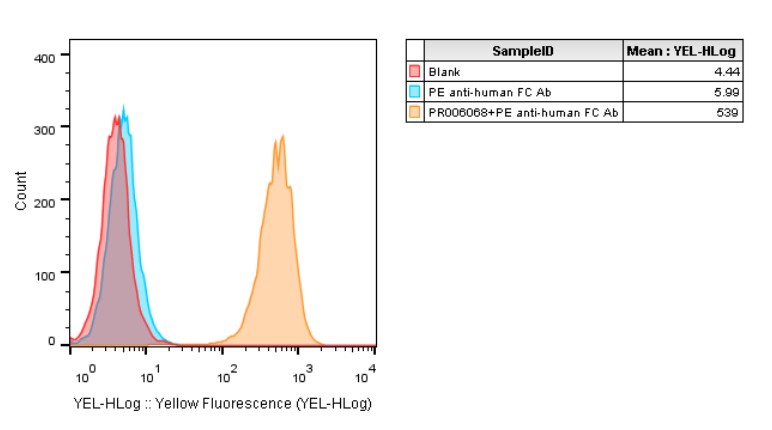
Figure 1: Characterization of mouse-IL11RA overexpression in the 293T-mouse-IL11RA stable clone using FACS.

Cell Resuscitation

  1. Pre-warm complete culture medium (basal medium and 10% FBS) in a 37°C water bath.
  2. Rapidly thaw the cryovial in a 37°C water bath for 1-2 minutes with gentle agitation.
  3. Transfer the vial to a biosafety cabinet, and disinfect the exterior with 70% ethanol.
  4. Aseptically transfer the cell suspension dropwise into a sterile centrifuge tube containing 9.0 mL of pre-warmed complete medium.
  5. Centrifuge at approximately 125 × g for 5–7 minutes at room temperature, carefully aspirate the supernatant without disturbing the cell pellet.
  6. Gently resuspend the pellet in an appropriate volume of complete medium and transfer the suspension into a T25 flask.
  7. Incubate the flask in a 37°C in a humidified 5% CO2 incubator.
  8. Assess cell viability and morphology after 24 hours. If cells appear healthy, replace the medium with fresh medium supplemented with the appropriate selective antibiotic.
  9. Subculture the cells at a ratio of 1:3-1:6 every 2-3 days upon reaching 80%–90% confluency.

Cell Freezing

  1. Prepare the freezing medium (70% basal medium, 20% FBS and 10% DMSO) freshly before use.
  2. Pre-chill the freezing medium on ice and label the cryovials accordingly.
  3. Transfer the cell suspension to a sterile conical tube and perform a cell count to determine total viability and density.
  4. Centrifuge the cells at 250×g for 5 minutes at room temperature; carefully aspirate the supernatant.
  5. Gently resuspend the cell pellet in chilled freezing medium, ensuring a minimum cell density of 3×10⁶ cells/mL.
  6. Aliquot 1 mL of the cell suspension into each pre-labeled cryovial.
  7. Place the cryovials into a CoolCell® container and store at -80°C overnight for controlled-rate cooling.
  8. Transfer the cryovials to the liquid nitrogen for long-term storage the following day.

References

1. Kespohl B, Schumertl T, Bertrand J, Lokau J, Garbers C. The cytokine interleukin-11 crucially links bone formation, remodeling and resorption. Cytokine Growth Factor Rev. 2021 Aug;60:18-27. doi: 10.1016/j.cytogfr.2021.04.002. Epub 2021 Apr 24. PMID: 33940443.
2. Widjaja AA, Chothani SP, Cook SA. Different roles of interleukin 6 and interleukin 11 in the liver: implications for therapy. Hum Vaccin Immunother. 2020 Oct 2;16(10):2357-2362. doi: 10.1080/21645515.2020.1761203. Epub 2020 Jun 12. PMID: 32530750; PMCID: PMC7644218.

Use License Agreement

Research Use Only.
Not for use in diagnostic procedures or therapeutic applications.
Redistribution of the cell line or its derivatives is prohibited without prior written permission from Kyinno Biotechnology.