KC-2505

293T-CCR3-Cell-Line

×
24196
Home » 293T-CCR3-Cell-Line

Background of 293T-CCR3-Cell-Line

CCR3, also known as CD193, encodes a protein that serves as a receptor for C-C chemokines. It belongs to family 1 of the G protein-coupled receptors. This receptor binds and responds to a variety of chemokines, including eotaxin (CCL11), eotaxin-3 (CCL26), MCP-3 (CCL7), MCP-4 (CCL13), and RANTES (CCL5). It is highly expressed in eosinophils and basophils, and is also detected in TH1 and TH2 cells, as well as in airway epithelial cells. This receptor may contribute to the accumulation and activation of eosinophils and other inflammatory cells in the allergic airway. It is also known to be an entry co-receptor for HIV-1. This gene and seven other chemokine receptor genes form a chemokine receptor gene cluster on the chromosomal region 3p21. Alternatively spliced transcript variants have been described.

Specifications

Catalog NumberKC-2505
Cell Line Name293T-CCR3-Cell-Line
Host Cell Line293T
DescriptionStable 293T clone expressing exogenous CCR3 gene
QuantityOne vial of frozen cells (≥2×10⁶ cells)
StabilityStable in culture over a minimum of 10 passages
ApplicationDrug screening and biological assays
Freezing Medium70% DMEM + 20% FBS + 10% DMSO
Propagation MediumDMEM + 10% FBS + 1μg/mL Puromycin
Selection MarkerPuromycin
MorphologyEpithelial
SubcultureSplit saturated culture 1:4-1:8 every 2-3 days; seed out at about 1-3 × 10⁵ cells/mL
Incubation37 °C with 5% CO2
StorageLiquid nitrogen immediately upon receiving
Doubling TimeApproximately 30 hours
Mycoplasma StatusNegative
In Vivo ValidationNA

Cell Line Generation

293T-CCR3-cell-line was generated using a lentiviral vector expressing the CCR3 sequence.

Characterization

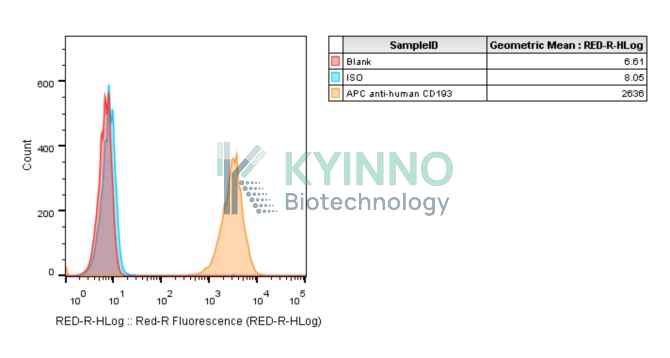
Figure 1: Characterization of CCR3 overexpression in the 293T-CCR3 stable clone using FACS.

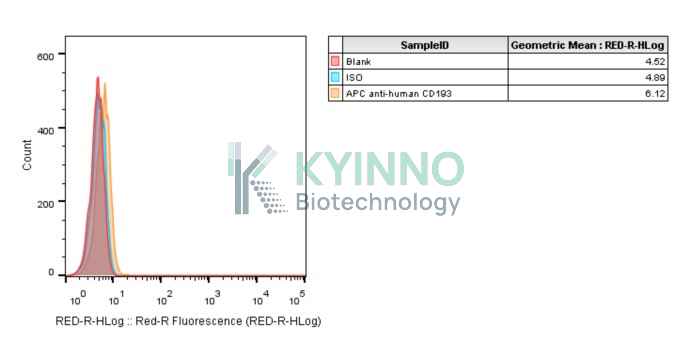
Figure 2: Characterization of endogenous CCR3 expression in 293T cells using FACS.

Cell Resuscitation

  1. Prewarm culture medium (DMEM supplemented with 10% FBS and 1μg/mL puromycin)in a 37°C water bath.
  2. Thaw the frozen vial in a 37°C water bath for 1-2 minutes.
  3. Transfer the vial into biosafety cabinet, and wipe the surface with 70% ethanol.
  4. Unscrew the top of the vial and transfer the cell suspension gently into a sterile centrifuge tube containing 9.0mL complete culture medium.
  5. Spin at ~ 125 × g for 5-7 minutes at room temperature, and discard the supernatant without disturbing the pellet.
  6. Resuspend cell pellet with the appropriate volume of complete medium and transfer the cell suspension into a T25 culture flask.
  7. Incubate the flask at 37°C, 5% CO2 incubator.
  8. Split saturated culture 1:4-1:8 every 2-3 days; seed out at about 1-3 × 10⁵ cells/mL.

Cell Freezing

  1. Prepare the freezing medium (70% DMEM + 20% FBS + 10% DMSO) fresh immediately before use.
  2. Keep the freezing medium on ice and label cryovials.
  3. Transfer cells to a sterile, conical centrifuge tube, and count the cells.
  4. Centrifuge the cells at 250×g for 5 minutes at room temperature and carefully aspirate off the medium.
  5. Resuspend the cells at a density of at least 3×10⁶ cells/mL in chilled freezing medium.
  6. Aliquot 1 mL of the cell suspension into each cryovial.
  7. Freeze cells in the CoolCell freezing container overnight in a -80°C freezer.
  8. Transfer vials to liquid nitrogen for long-term storage

References

  1. Onkanga IO, Sang H, Hamilton R, Ondigo BN, Jaoko W, Odiere MR, Ganley-Leal L. CD193 (CCR3) expression by B cells correlates with reduced IgE production in paediatric schistosomiasis. Parasite Immunol. 2023 May;45(5):e12979. doi: 10.1111/pim.12979. Epub 2023 Mar 27. PMID: 36971331.
  2. Salemi M, Cannarella R, Marchese G, Salluzzo MG, Ravo M, Barone C, Cordella A, Caniglia S, Castiglione R, Ragalmuto A, Calogero AE, Romano C. CCR3 gene overexpression in patients with Down syndrome. Mol Biol Rep. 2021 Jun;48(6):5335-5338. doi: 10.1007/s11033-021-06503-w. Epub 2021 Jun 28. PMID: 34184200.

Use License Agreement

Research Use Only.
Not for use in diagnostic procedures or therapeutic applications.
Redistribution of the cell line or its derivatives is prohibited without prior written permission from Kyinno Biotechnology.